
Weeping Water Commercial Roofing Contractor
Planning That Protects Stock and Equipment Under an Open Roof
As a Weeping Water commercial roofing contractor, we plan staging, lift access, and weather windows before tear-off starts, so the building and what is inside stay dry.
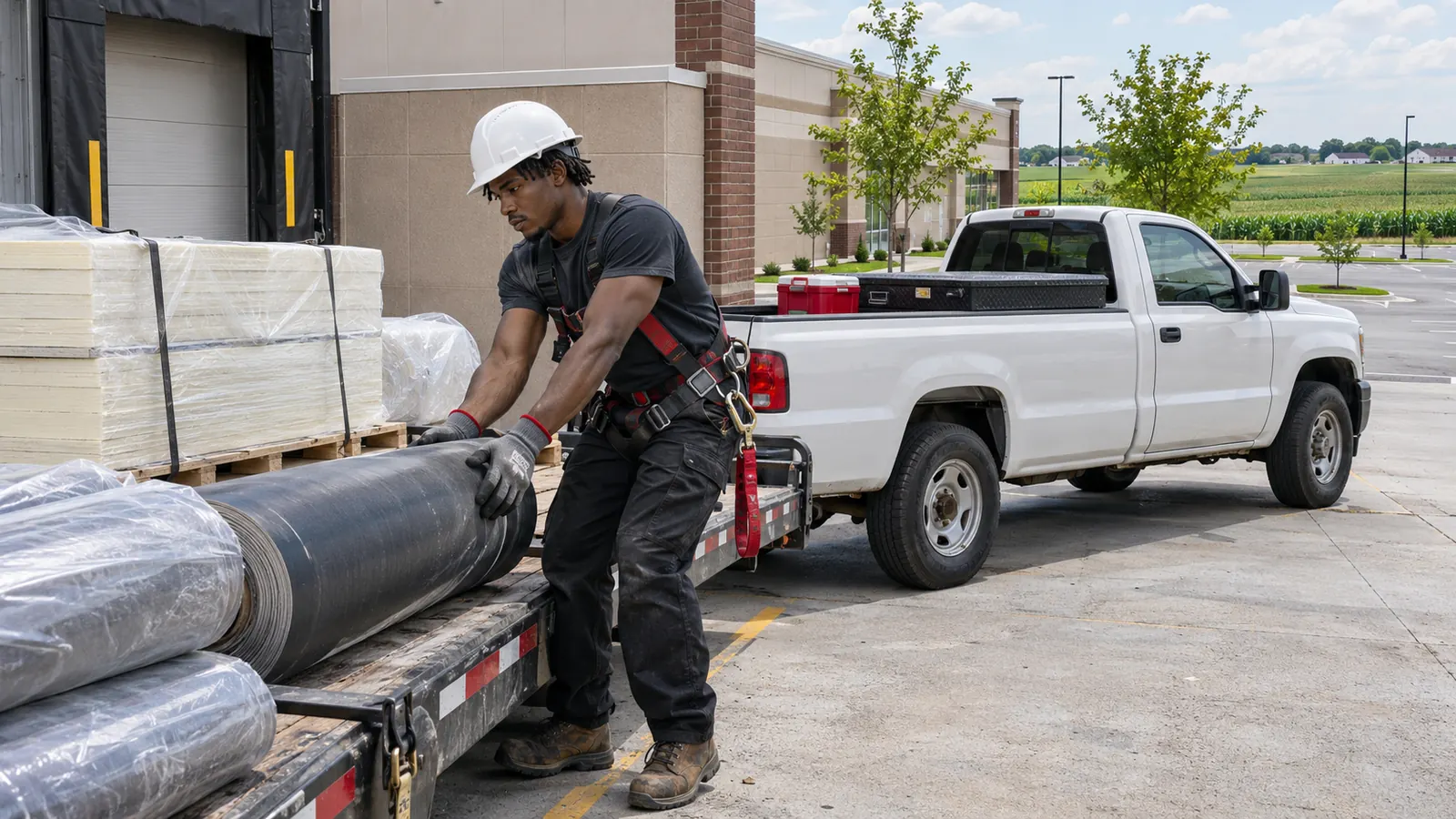
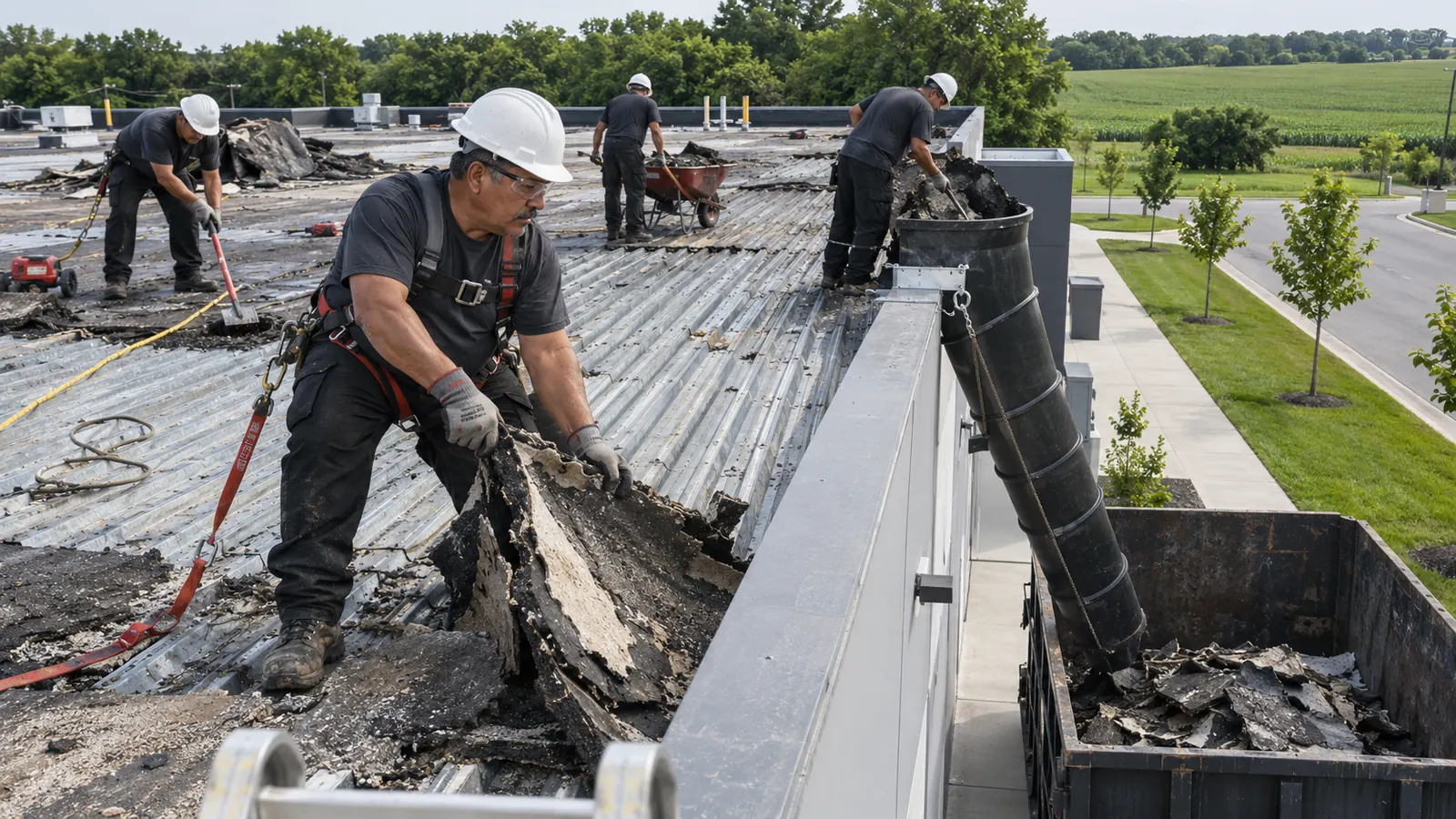
Weeping Water Commercial Roofing Starts With Staging and Access
Weeping Water commercial roofing jobs go smoothest when access, storage, and weather are worked out first.
We need room for a dumpster, a material staging area, and a lift close to the roof. Inventory or equipment under the work area may need covering. Membrane adhesives and welding want mild, dry weather, so most tear-offs here are scheduled from spring through fall.
- Dumpster spot kept clear of customer parking
- Staging area sized for insulation and membrane rolls
- Lift placement agreed before delivery day
- Inside cover for stock under open sections
On the roof walk we mark the dumpster, lift, and staging spots on a sketch of your lot and agree on them with you before the first delivery is booked.
Commercial Roofing Weather Risks for Weeping Water Buildings
Weather and access shape five parts of every job here.
Open Sections
Any section torn off is exposed until dried in. We size each day's tear-off to the forecast and keep tarps and temporary seals on the roof.
Roof Edges
Wind gusts lift loose membrane at edges during install. Perimeter sheets are fastened or adhered first, and edge metal follows right behind, so no open edge is left overnight for a storm to catch.
Drains In Use
Drains keep working through the job, with strainers guarded from debris so a surprise shower runs off the open roof instead of soaking new insulation board waiting to be covered.
Material Loads
Pallets of board set on the roof are spread over joists and purlins, keeping concentrated weight off the deck between them.
Cold Mornings
Frost and dew delay adhesive and seam work. Crews start on mechanically fastened work and hold bonding until the surface is dry.
What Careful Commercial Roofing Planning Saves Weeping Water Owners
Good planning shows up on the ground as much as on the roof.
Dry Inventory
Covered stock and daily dry-in keep water off shelves under open roof sections.
Clear Parking
Dumpster and lift spots chosen early keep customer lanes open during the roof job.
Fewer Delays
Weather-matched scheduling keeps adhesives and welds within their product limits on the roof.
Clean Finish
Magnet sweeps and debris cleanup leave lots and walks free of roofing nails.
Secure Edges
Perimeter sheets fastened first keep gusts from lifting membrane while the roof is open.
Working Drains
Guarded strainers keep drains running, so passing showers leave the roof quickly.
Safer Lot
Lift and staging zones are fenced off from customers and staff walking below the roof.
Clear Schedule
You know which days work is overhead and which days are held for roof weather.
Roof Systems and Weather Windows in Weeping Water
Each system has its own weather needs, which shape when the job can run.
| System | Weather Needs | Fits | Watch For |
|---|---|---|---|
| Mechanically attached TPO | Works in cooler, dry weather | Retail and office flat roofs | Frost on morning seams |
| Adhered EPDM | Needs mild temperatures for bonding adhesive | Simple flat roofs and warehouses | Bonding delayed by cold |
| Metal panels | Installs in most dry weather | Sloped shops and farm buildings | Gusts during panel setting |
| Tapered insulation | Any flat roof with ponding | Goes down in dry weather only | Wet board left from rain |
Water Getting In Now, or a Roof to Schedule?
Scheduling Commercial Roofing Work in Weeping Water
Four steps, built around access and the weather.
Inspect Your Roof
We walk the roof, take core cuts, and walk the lot too, marking where a dumpster, lift, and staging area can sit without blocking customers.
Book The Window
Tear-off dates are set for a dry stretch in the forecast, with backup days held. You know ahead which days work will be overhead.
Stage The Lot
Dumpster, lift, and material pallets arrive in the spots agreed on the roof walk, with customer lanes and doors kept open.
Dry In Daily
Each section torn off is insulated and covered before the crew leaves, and tarps stay ready on the roof for passing showers.
Clean Up And Review
Debris is hauled off, the lot is swept for nails, and we walk the finished roof with you and hand over photos.
Our Commercial Roofing Service Area
We install and replace commercial roofs in Papillion and the towns listed here.
Outside these towns? call us or send us a message.
Weeping Water Roofing Questions
Planning
What should a Weeping Water business plan before a commercial roofing project?
Access, operations, and weather. Plan space for a dumpster, a staging area, and a lift near the roof, and decide what inventory or equipment under the work needs covering. Adhesives and welding want mild, dry weather, so spring through fall is the usual window here.
How does commercial roofing for Weeping Water businesses work on delivery days?
Deliveries keep running. Material drops are scheduled around your own truck traffic, the lift and dumpster sit away from loading doors, and overhead work near doors pauses during busy delivery windows if you ask. We set those times with you on the roof walk.
Weather And Cleanup
What happens if rain moves in during a Weeping Water tear-off?
Each day's tear-off is limited to what can be dried in, and temporary seals and tarps stay on the roof. If a shower builds, the crew closes open edges first, then waits it out. Wet insulation is never covered over; it is replaced once the weather clears.
How is debris handled around a Weeping Water storefront?
Chutes or a lift carry debris straight to a dumpster set away from customer doors. The lot, walks, and landscaping get magnet-swept for nails at the end of each day, and the dumpster leaves as soon as tear-off wraps up.
Cost And Hiring
What affects Weeping Water commercial roofing cost?
Roof size, tear-off layers, insulation, and the system chosen set most of it. Access adds a smaller share: lift rental, how far material travels from truck to roof, and any staging limits. Wet board and deck repairs found during tear-off add to the total.
How do I hire a commercial roofing contractor near Weeping Water?
Ask for a written scope that covers core cuts, layers removed, insulation, membrane thickness, and flashing at every curb and wall. Also ask how they will stage the job on your lot and handle rain days. Clear answers on both point to a well-run job.
Hire a Weeping Water Commercial Roofing Contractor
Send the address and a note on lot space, or call and we will plan it with you.