Papillion EPDM Roofing Contractor
Rubber Membrane That Keeps Warehouses Dry Through Freeze and Thaw
As a Papillion EPDM roofing contractor, we install fully adhered and ballasted EPDM over new insulation and flash every wall, curb, and drain with matching rubber.
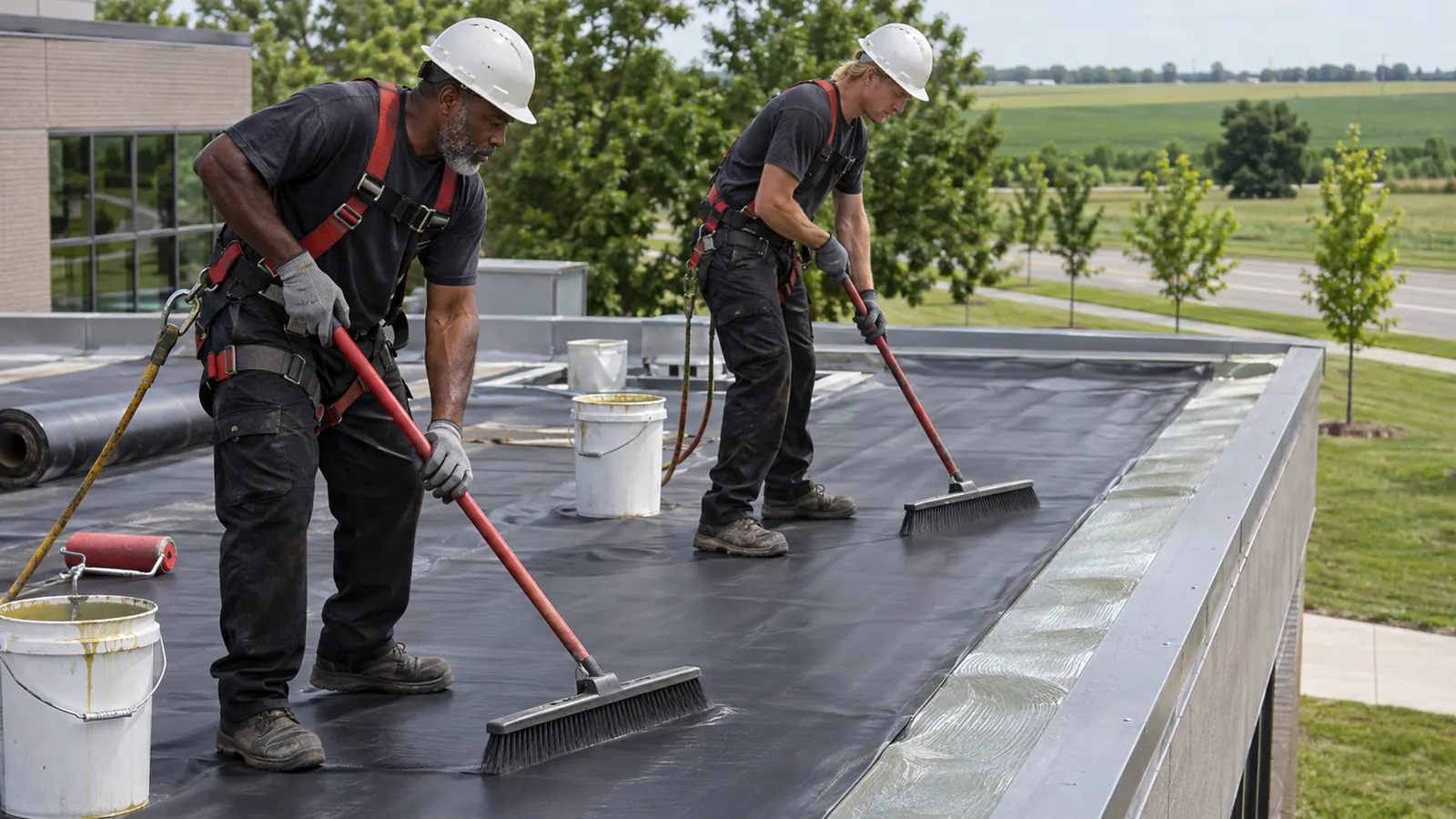
Is Papillion EPDM Roofing the Right Fit?
Papillion EPDM roofing works well on warehouses, older flat roofs, and buildings that want a membrane easy to patch later. Here is where it fits and where we point elsewhere.
EPDM Fits When
- The roof is large, flat, and simple, with few penetrations.
- A strong deck and parapets can hold ballast stone.
- Owners want a membrane that patches easily with tape and rubber.
- Deep winter cold and freeze-thaw cycles worry the owner.
- An existing EPDM roof is being torn off and replaced in kind.
Another System Fits Better When
- Tenants want a white surface to cut summer heat on top floors.
- Exhaust fans drop grease or oils onto the roof.
- The roof has enough slope for metal panels.
- Dozens of curbs crowd the field and welded details save labor.
EPDM Roofing Trouble Spots on Papillion Warehouses
EPDM rarely fails in the middle of the sheet. It fails at the edges, laps, and details listed here.
Seam Laps
Older EPDM laps glued with liquid adhesive let go as they age. New roofs use primed seam tape with a cover strip at every T-joint, and we pull-test sample laps before leaving.
Wall Flashing
Membrane shrinkage tugs flashing off parapets and taller walls, leaving gaps at the base. New flashing gets a termination bar and counterflashing so the rubber stays anchored.
Corners And Edges
Wind lifts edges first, and ballasted roofs lose stone at the corners. Extra adhesive, pavers, or added fasteners hold perimeter zones where uplift pressure is highest.
Pipe Boots
Plumbing vents and conduit get molded EPDM boots clamped at the top. Cracked boots and dried sealant at old penetrations are a common source of slow leaks.
Ballast Areas
Stone hides the membrane, so leak tracing means moving rock by hand. On ballasted roofs we plan walk paths and inspection lanes to keep future repairs quicker.
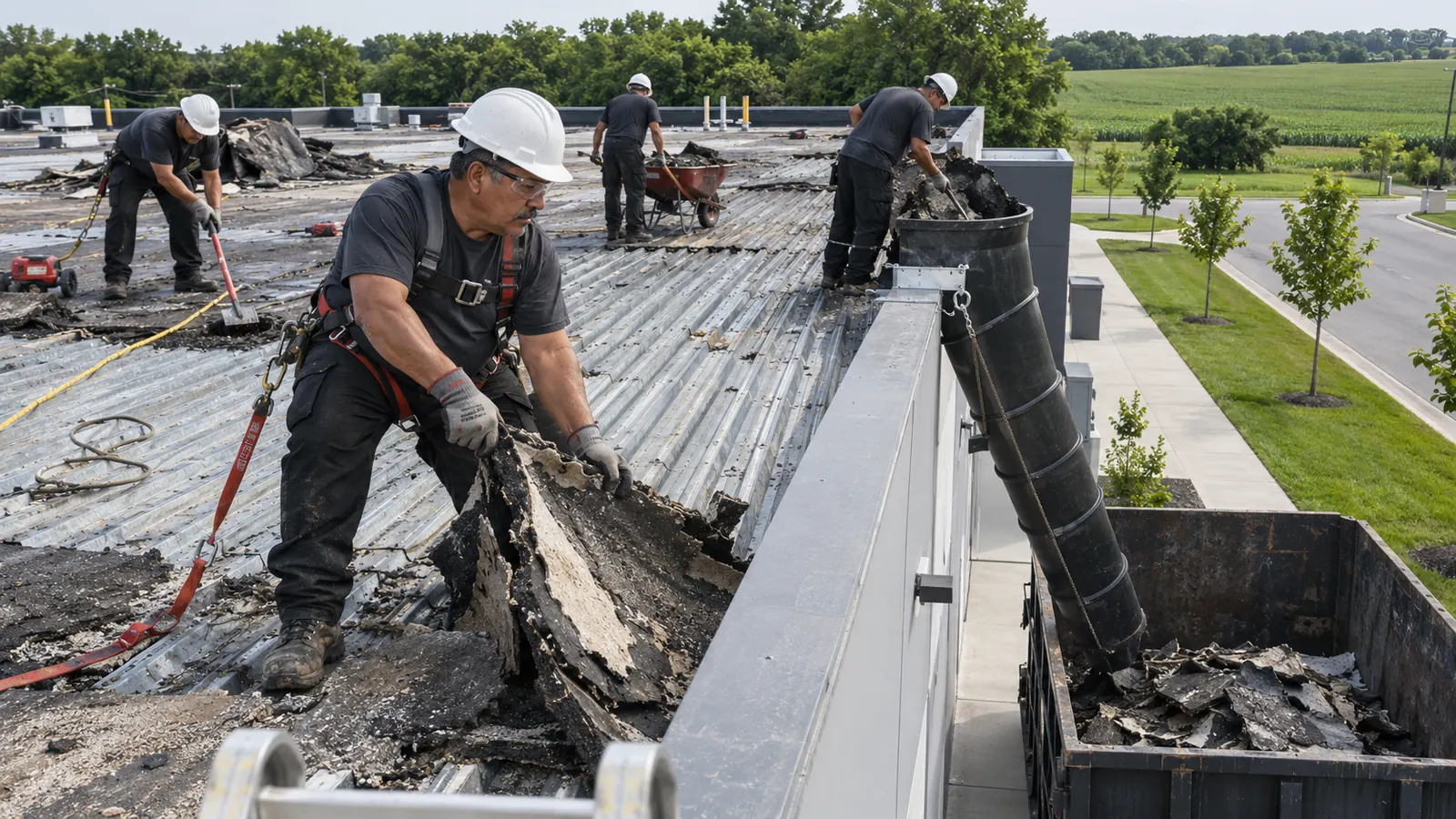
Adhered or Ballasted EPDM Roofing in Papillion
Attachment is the biggest choice on an EPDM job, and the deck decides most of it.
Fully adhered EPDM is glued to cover board, so it handles roofs with many penetrations, higher wind exposure, or decks that need to stay light. Ballasted EPDM is loose-laid under river stone, which needs a strong deck and parapets to keep the rock in place.
Fully Adhered vs Ballasted EPDM
- 60 mil sheet for most warehouse roofs
- 90 mil where hail and foot traffic run heavy
- Large panels to cut the number of field laps
- Molded boots and pressure-sensitive flashing at details
What EPDM Roofing Gives Papillion Building Owners
Rubber roofs earn their place on simple, cold-climate roofs for a few plain reasons.
Cold Flexibility
Rubber stays pliable at temperatures that leave some other roof membranes stiff and easier to crack.
Simple Patches
Years later, a puncture is cleaned, primed, and covered with a taped EPDM patch over the damaged spot.
UV Resistance
Black EPDM shrugs off sunlight, so the field sheet ages slowly between seam checks.
Fewer Laps
Wide rolls cover big warehouse roofs with far fewer seams than narrow sheets would need.
Seam Opening Now, or Planning an EPDM Roof?
How We Install an EPDM Roof
Five steps take an EPDM roof from the first core cut to the final walk.
Inspect Your Roof
Core cuts tell us how many layers exist and whether insulation is wet. We also check the deck for rust or soft spots and note which walls show shrinkage pull.
Prepare The Deck
Old layers come off in sections we can close before the end of the day. Damaged deck is replaced, then tapered insulation and cover board are fastened down.
Lay And Bond Sheets
Rolls relax in the sun before bonding adhesive goes on both the sheet and the board. On ballasted jobs, the sheet is loose-laid and stone follows right behind the crew.
Tape Every Lap
Seam areas are cleaned and primed, then tape goes in and gets rolled tight. Cover strips seal each T-joint, and molded boots go on every pipe.
Flash And Review
Walls get termination bar and counterflashing, drains get new clamping rings, and we walk the finished roof with you, pointing out details worth checking each spring.
Pairing EPDM With Other Papillion Roof Systems
Buildings with mixed roof areas often use EPDM beside one of these.
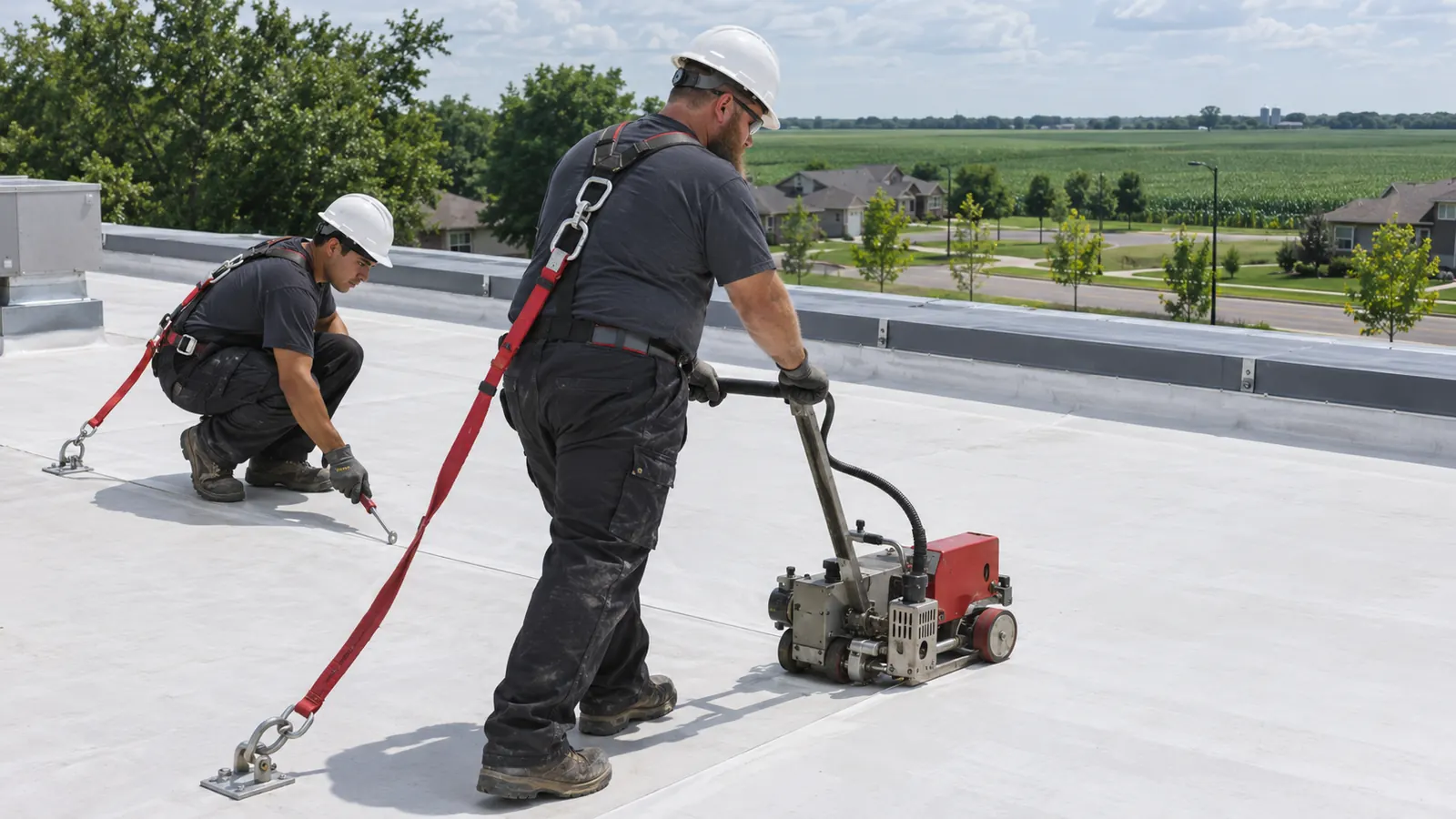
TPO Roofing
White, heat-welded single-ply for retail and office roofs that carry many rooftop units and want a reflective surface.
TPO roofing in Papillion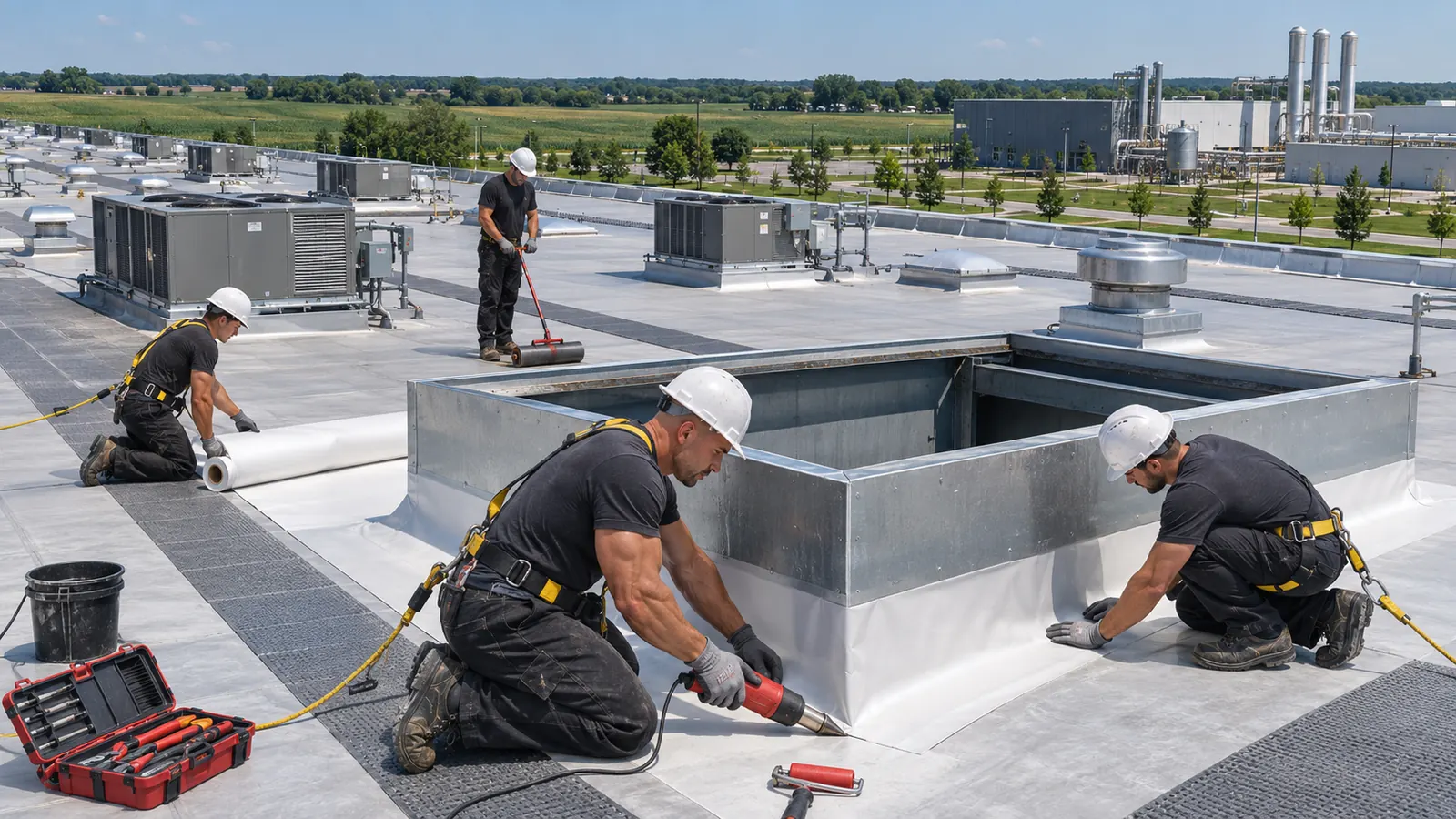
Industrial Roofing
Thicker, chemical-rated membranes and protected walkways for manufacturing roofs with exhaust and heavy service traffic.
Industrial roofing in Papillion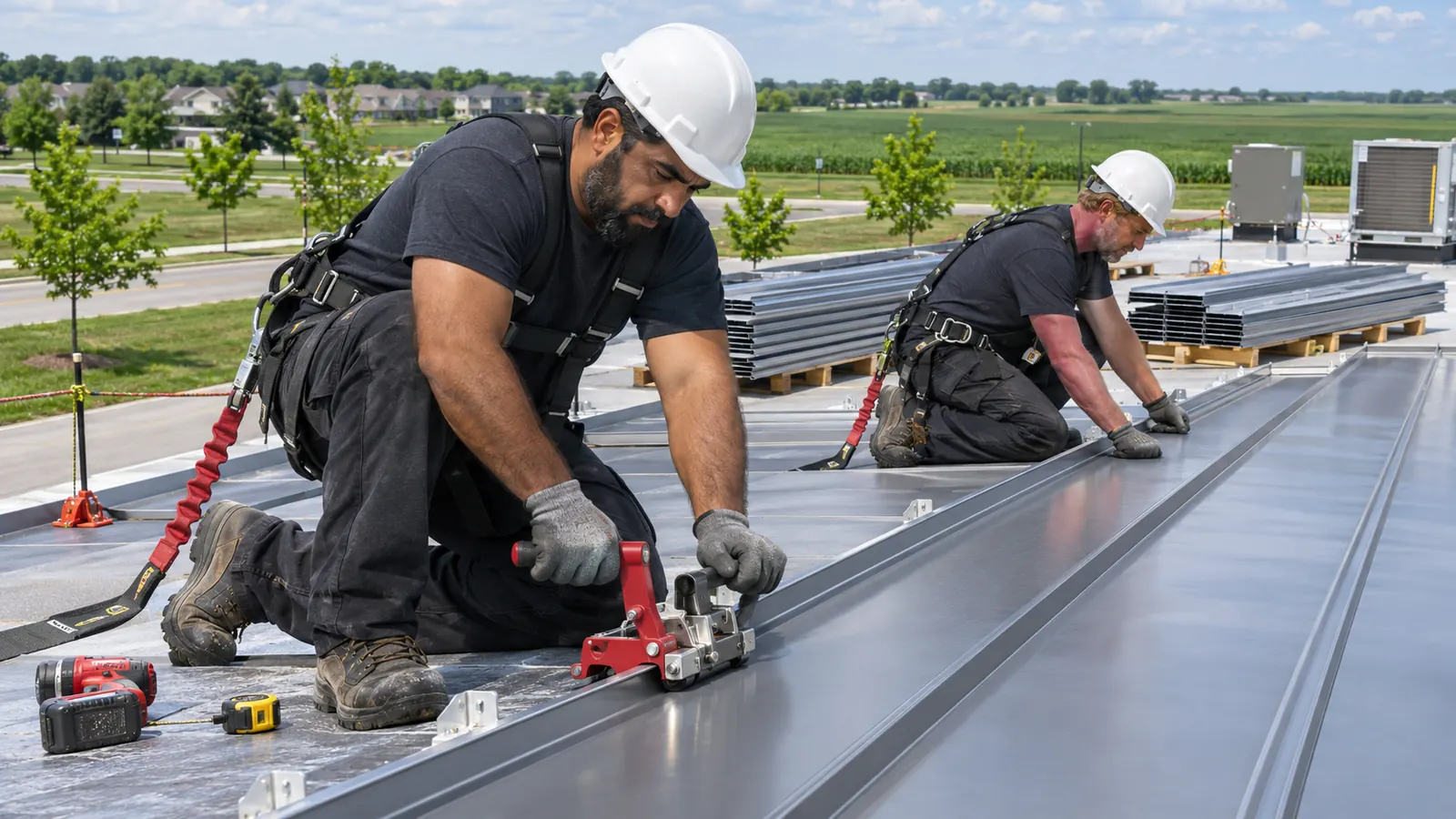
Commercial Metal Roofing
Panel roofs for shops and farm buildings with enough pitch, set on clips or screws to match the framing.
Commercial metal roofing in Papillion
Papillion EPDM Roofing Questions
Cost And Life
What does EPDM roofing cost for a Papillion building?
Attachment, thickness, insulation, and roof details set the price. Ballasted EPDM saves adhesive but needs a deck that can carry stone, while fully adhered sheets cost more in glue and labor. Tear-off of old roofing, wet insulation, and a busy roof full of penetrations add to any EPDM price.
What is the average lifespan of an EPDM roof in Papillion?
It depends on thickness, seam condition, and upkeep more than on the rubber itself. EPDM handles sun and cold well, so the field sheet ages slowly, while seam tape and flashing details wear first. Ponding, edge shrinkage, and punctures shorten service; regular seam and flashing repairs lengthen it.
Problems And Upkeep
What are common problems with EPDM roofs in Papillion?
Seams separating, sheets shrinking, and punctures cover most calls. Liquid-adhesive laps on older roofs open with age, shrinkage pulls flashing away at walls and curbs, and hail or boots can pierce the rubber. Repairs use compatible seam tape and EPDM patches after the area is cleaned and primed.
How often should a Papillion EPDM roof be checked?
Twice a year, spring and fall, plus after any hail or high-wind storm. Each check covers seam laps, T-joints, wall flashing, pipe boots, and drains. Catching an open lap early keeps water out of the insulation, which costs far less than replacing wet board later.
Attachment And Wind
Fully adhered or ballasted EPDM: which suits a Papillion roof?
Fully adhered EPDM is the pick for roofs with many penetrations, high wind exposure, or a deck that has to stay light. Ballast works on big, simple roofs with strong decks and parapets to hold stone, though moving rock slows leak tracing. Deck capacity and layout settle it.
How do wind storms affect EPDM and TPO roofs in Papillion?
Wind works on the edges, corners, and any loose seam first, since uplift peaks at the perimeter. Edge metal that is poorly secured peels back and lets air under the sheet, and ballast scatters at corners. We fasten edge metal, add attachment in perimeter zones, and inspect after severe storms.
Hire a Papillion EPDM Roofing Contractor
Tell us about the building and roof, and we will set up a walk and core cuts.