
Eagle Commercial Roofing Contractor
Which Membrane Fits a Small Roof Crowded With Scuppers and Units?
We are an Eagle commercial roofing contractor for small flat-roof shops and offices, where scuppers, walls, and rooftop units fill a short roof.
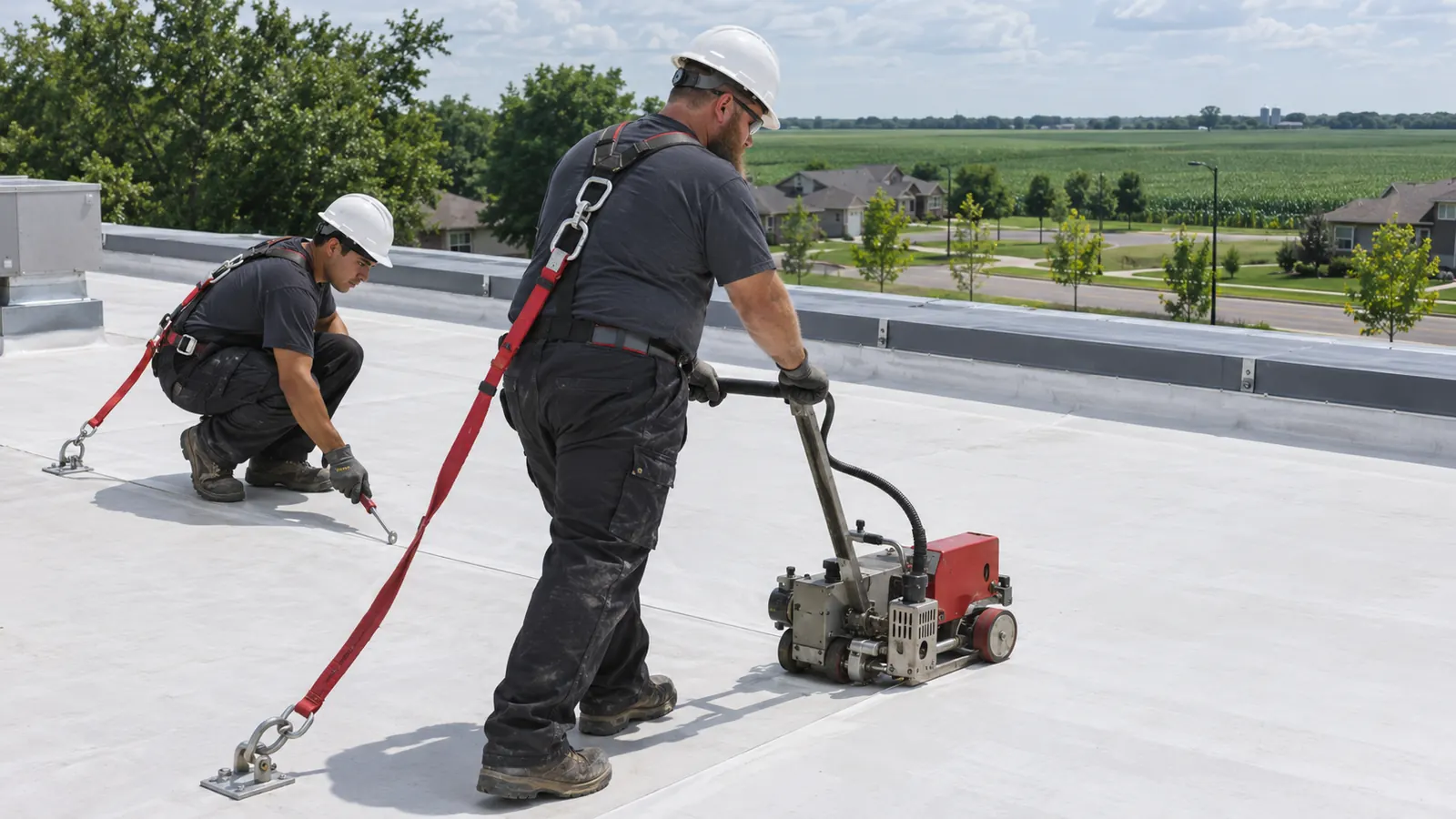
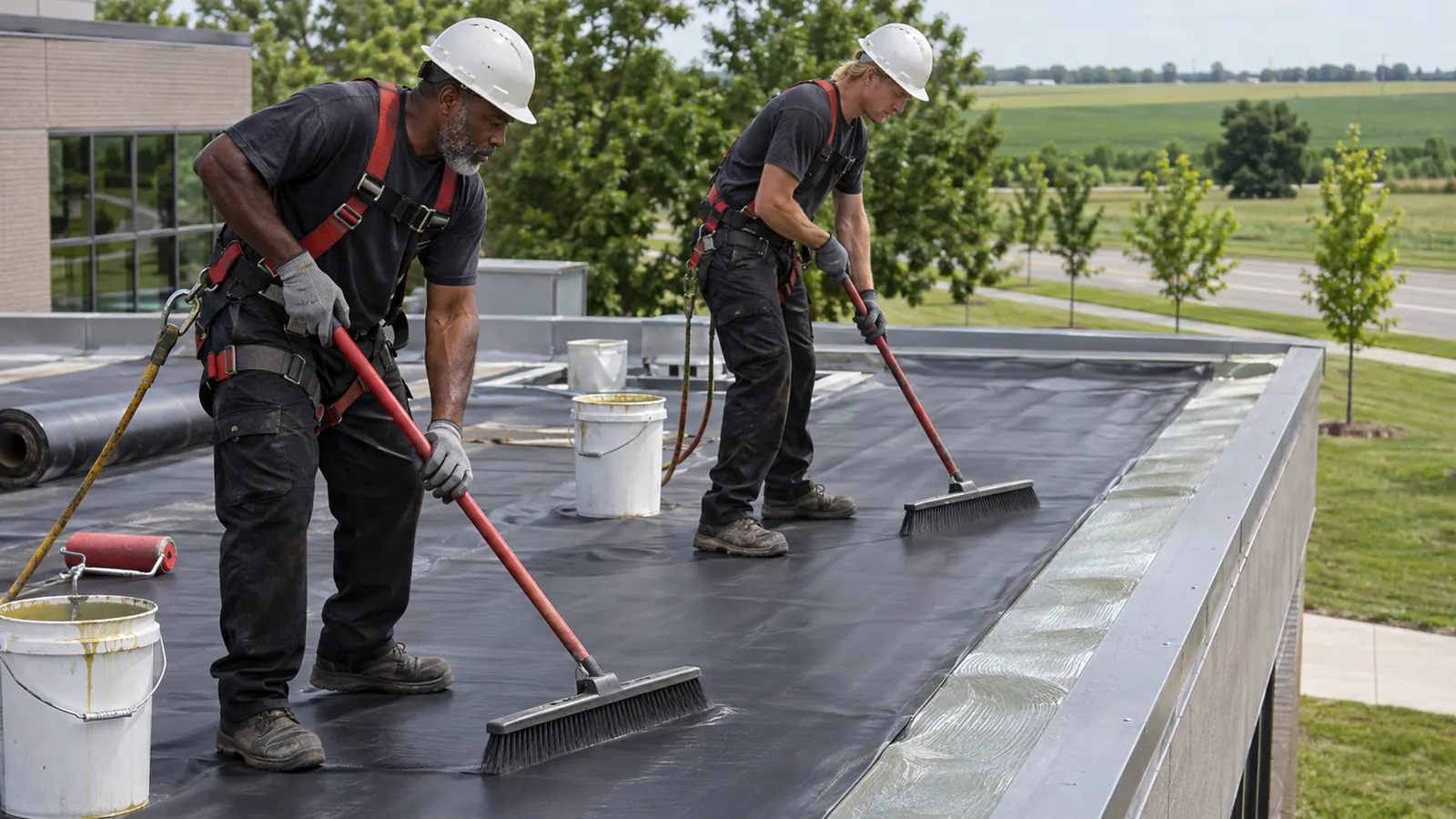
Eagle Commercial Roofing for Small Flat Roofs
Eagle commercial roofing work is mostly small buildings, and small roofs carry a lot of detail for their size.
A 4,000 square foot shop roof can have as many scuppers, wall flashings, and curbs as a roof three times larger. We price and plan by those details: how each scupper drains, how high each wall flashing runs, and whether units sit on curbs tall enough for new insulation.
- Scuppers rebuilt with new boxes and leader heads
- Wall flashing run up and capped with counterflashing
- Short curbs raised for new tapered board
- Membrane picked for the roof's details first
Because the details are most of the job, two small roofs of the same size can price very differently. The roof walk counts every scupper, curb, and wall run so the scope matches your building.
Where Commercial Roofing Fails on Eagle Shop Roofs
Small roofs fail at their details. These five come up on nearly every building we walk in town.
Through-Wall Scuppers
Water leaves many small roofs through a scupper in the parapet. Rusted boxes and sealant gaps at the wall let it run inside the wall instead of out.
Low Wall Flashing
Flashing that stops a few inches up a wall leaves room for snow melt to get behind it. New flashing runs higher and is held by termination bar.
Crowded Curbs
Two or three units on a short roof leave little space between curbs. Tight spacing calls for careful flashing and crickets so water flows around them.
Ponding Corners
Small decks sag where framing spans long, leaving water in corners after rain. Tapered board added at replacement lifts those spots toward the drain.
Old Patches
Years of mastic and patches pile up on small roofs. Core cuts beside them show whether the board underneath stayed dry.
Commercial Roofing Gains for Eagle Business Owners
On a small roof, fixing the details is most of the benefit.
Fewer Leak Points
Rebuilt scuppers and taller wall flashing close the spots where small roofs leak most.
Even Drainage
Tapered board moves water off sagging corners and into the scupper box.
Room At Curbs
Raised curbs give new insulation and flashing the height they need at each unit.
Simple Upkeep
One membrane, fresh details, and a photo record make yearly roof checks quick.
Taller Wall Flashing
New flashing runs high enough that snow melt against the parapet stays outside the membrane.
Drier Corners
Water that used to sit in sagging corners now runs to the scupper after each rain.
Patch-Free Roof
Years of mastic and old patches come off with the tear-off, leaving one clean membrane.
Secured Edges
Fresh edge metal on short roof runs holds the membrane down in spring wind storms.
Matching a Membrane to an Eagle Roof
Small roofs mostly come down to TPO or EPDM, with metal on sloped additions.
| System | Best Match | Strength | Watch For |
|---|---|---|---|
| EPDM | Simple roofs with few units | Handles cold and patches easily | Shrinkage at walls |
| TPO | Roofs with several curbs and units | Welded details and a white surface | Punctures near units |
| Metal panels | Sloped shop additions | Sheds snow and sets on purlins | Condensation in heated shops |
| Modified bitumen (existing) | Older small shops | Removed down to the deck at replacement | Layers hiding wet board |
Water at the Scupper, or Time for a New Roof?
Commercial Roofing Steps on an Eagle Job
Small jobs still follow four full steps.
Inspect Your Roof
We trace every scupper, wall flashing, and curb, take a core cut beside the oldest patches, and check the deck where water has ponded.
Plan The Details
Scupper boxes, flashing heights, and curb raises are listed one by one, since on a small roof they make up most of the work.
Replace In One Push
Many small roofs are torn off and dried in during one stretch of good weather, keeping the shop open below.
Rebuild Scuppers And Walls
Each wall gets its rebuilt scupper box, leader head, and flashing as the membrane reaches it, so every detail is finished in the same pass.
Test The Drainage
After the membrane and details are done, we run water toward each scupper and walk the roof with you to check it drains clean.
Towns We Cover From Papillion
We take commercial roofing work in Papillion and four other towns besides Eagle. Outside them? call us or send us a message.
Office And Retail Buildings
Papillion (home base) Our home base, mostly retail and warehouse roofs.
La Vista Multi-tenant office and retail roofs.
Older Main Street Buildings
Bennet Older buildings that need full tear-off.
Weeping Water Downtown shops and staging-heavy jobs.
Small Shops And Mixed Roofs
Ceresco Mixed flat and metal buildings.
Eagle Roofing Questions
Systems And Scuppers
Which commercial roofing systems suit small flat-roof buildings in Eagle?
TPO or EPDM over new insulation fits most of them. Small roofs pack scuppers, walls, and units into little space, so the details weigh heavily. EPDM handles cold and simple repairs; TPO brings a reflective top and welded seams. Drainage, deck condition, and the existing roof settle which one goes on.
How are scuppers repaired on an Eagle shop roof?
The old scupper box is pulled, the wall opening is checked for rot or rust, and a new box is set and flashed into the membrane. A new leader head and downspout take the water down the wall, and sealant joints are kept off the path the water runs.
Hiring
What does commercial roofing for Eagle businesses usually involve?
Mostly small flat-roof shops, offices, and service buildings. The work is a full tear-off or recover, new tapered insulation, a TPO or EPDM membrane, rebuilt scuppers, and new wall and curb flashing. The shop stays open below, and debris is kept away from customer parking.
What should I ask a commercial roofing contractor near Eagle before hiring?
Ask how they will handle each scupper, wall flashing, and curb, and whether core cuts are part of the inspection. Get the membrane thickness, insulation, and tear-off plan in writing. A clear scope lets you compare bids for the same work instead of comparing prices alone.
Cost And Upkeep
Does a small Eagle roof cost more per square foot?
Usually, yes. Setup, staging, and minimum material orders spread over fewer squares, and small roofs carry many details for their size. The total stays below a large roof, while the per-foot figure runs above warehouse pricing.
How often should Eagle commercial roofing near me be checked?
Spring and fall, plus after hail or a big wind. On a small roof the walk is quick: clear the scupper, look at wall flashing and curb corners, and check old patch areas. Most leaks caught this way become small repairs instead of wet insulation.
Hire an Eagle Commercial Roofing Contractor
Send the shop address, or call and tell us how the roof drains today.