
Papillion Commercial Roofing Contractor
New Roofs for Retail Centers, Tilt-Up Warehouses, Plants, and Shops
As a Papillion commercial roofing contractor, we install and replace TPO, EPDM, industrial, and metal roofs. Every job starts with a roof walk and a moisture check.
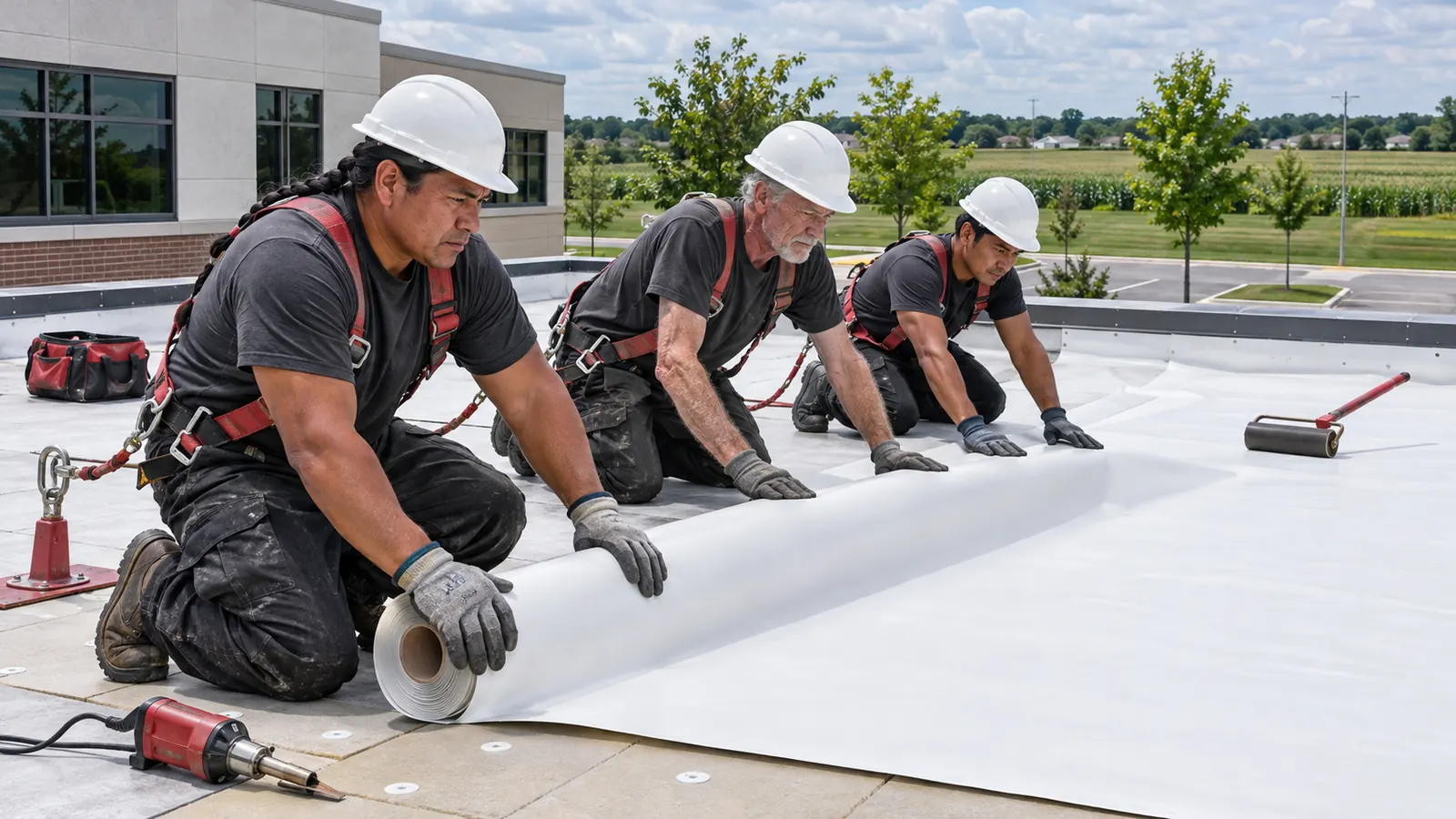
Papillion Commercial Roofing Contractor for Low-Slope and Metal Roofs
Papillion commercial roofing work fits most buildings with a low-slope deck or a metal roof that has worn past repair. Here is how we sort the two.
Flat Roofing for Commercial Buildings Ready for Replacement
- Leaks show up in several bays after every heavy storm.
- Core cuts find wet insulation across large parts of the roof.
- Seams on an old EPDM roof have opened in more than one area.
- Exposed-fastener metal panels have rusted through at the laps.
- The roof already carries two layers and needs a full tear-off.
Repairs Come First When
- One leak traces back to a single curb, drain, or flashing joint.
- Moisture readings stay dry everywhere outside a small wet patch.
- The membrane is still flexible and the seams probe tight.
- Metal panels are solid and only screws or sealant have failed.
How a Commercial Roofing Job Runs in Papillion
These steps happen on every roof we replace, from a strip-center roof to a plant roof carrying forty curbs.
Inspect Your Roof
Walking the full roof comes first. We mark soft spots, open seams, and rusted panel laps, then take core cuts to see how many layers sit on the deck and whether the insulation is wet.
Choose The System
TPO, EPDM, or metal gets picked by deck type, slope, rooftop equipment, and how the building is used. You get a written scope naming membrane thickness, insulation, and edge metal.
Pull Permits And Plan
Papillion's Building and Fire Safety Department reviews reroof permits, so we file before tear-off. Staging, dumpster spots, and crane picks get planned around your entrances and dock doors.
Tear Off And Dry In
Crews remove old layers only as far as they can dry in before quitting for the day. Damaged deck is replaced, then new insulation and membrane go down section by section.
Flash And Walk It Again
Curbs, drains, parapets, and pipe penetrations get flashed last. Before we leave, every welded or taped seam is probed and the roof is walked with you or your facility manager.
Commercial Roofing Systems We Install in Papillion
Four roof systems cover nearly every commercial building in and around town, from strip centers to equipment shops.
TPO Roofing
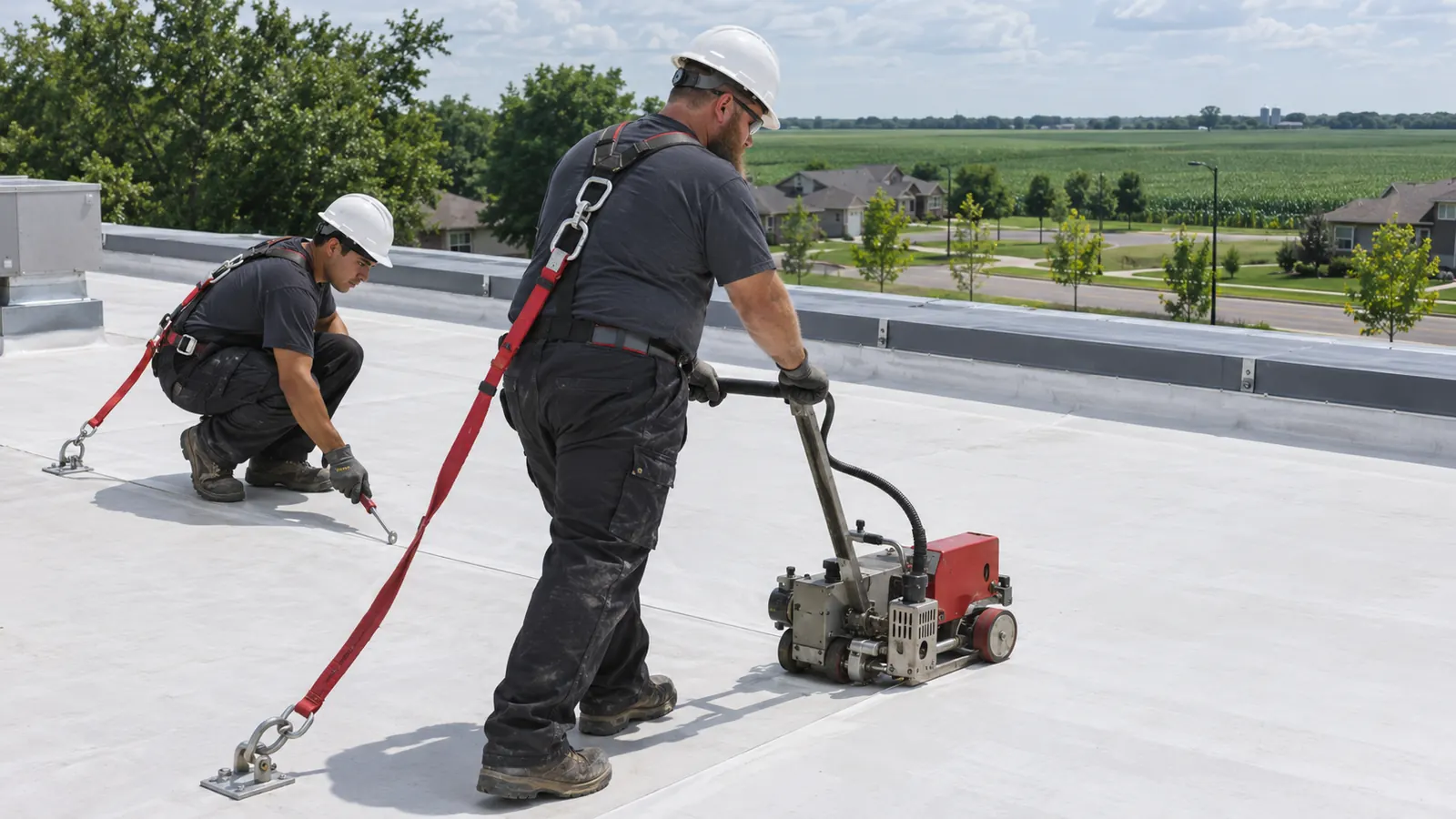
White TPO sheets are heat-welded at every seam, which fits retail and office roofs with interior drains and lots of rooftop units. We install 60 and 80 mil sheets over new insulation board.
TPO roofing in Papillion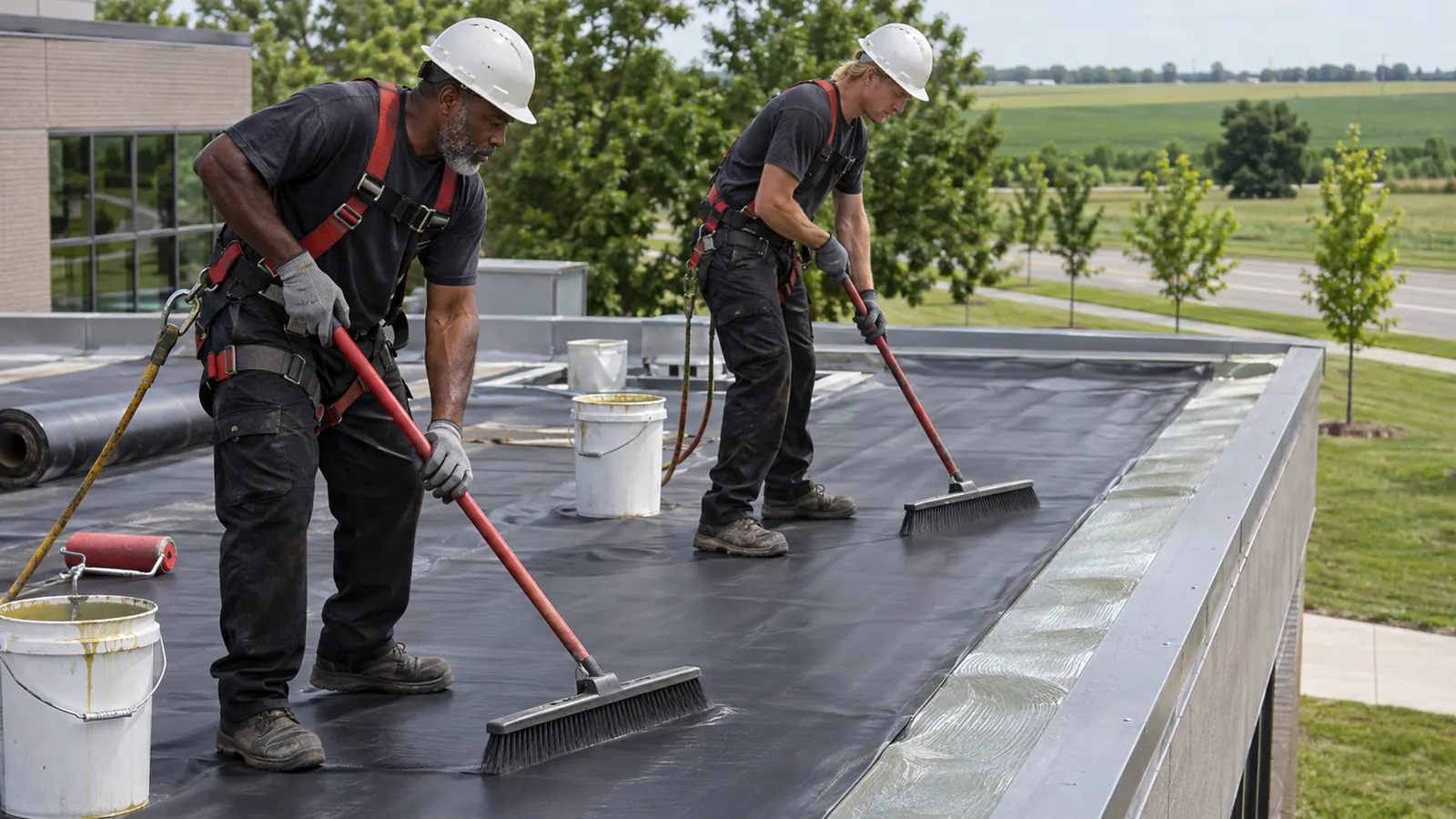
EPDM Roofing
Black EPDM rubber stays flexible through hard freezes and patches easily years later. It fits warehouses and older flat roofs, installed fully adhered or ballasted where the deck can carry stone.
EPDM roofing in Papillion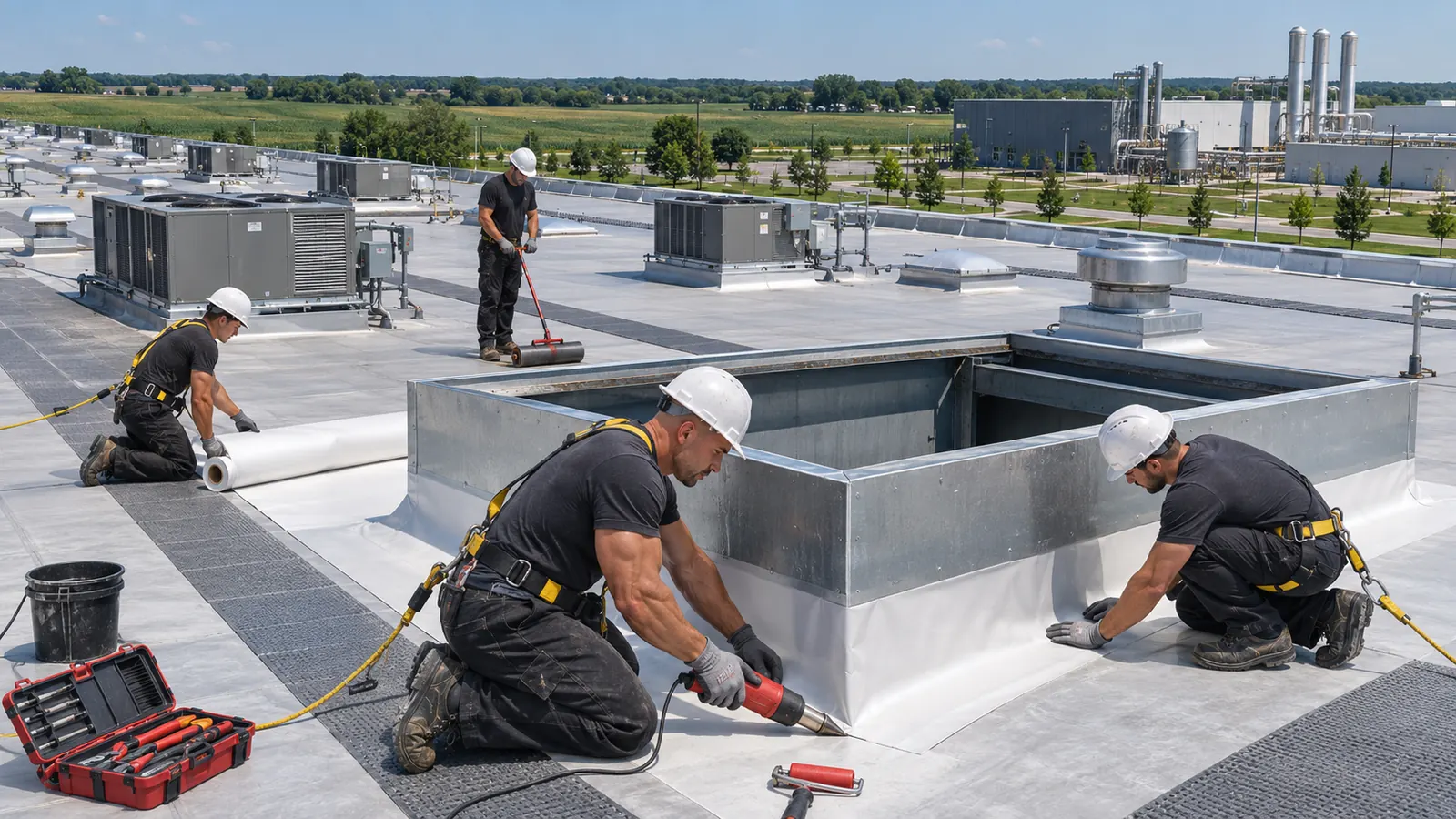
Industrial Roofing
Plants with exhaust fans, process piping, and daily roof traffic get thicker reinforced membranes, raised curbs, and walkway pads. Work is scheduled with plant maintenance around shifts and production air.
Industrial roofing in Papillion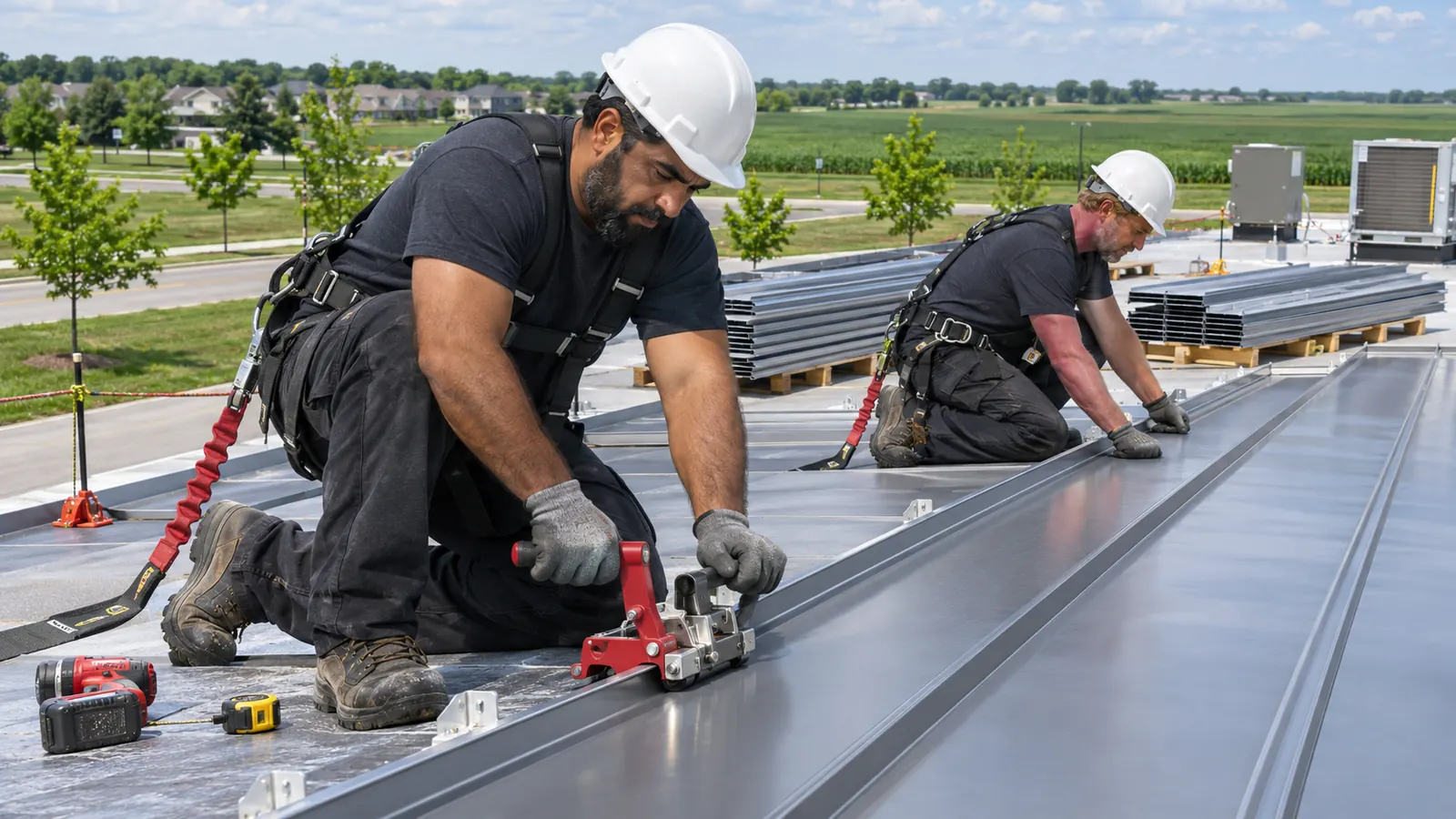
Commercial Metal Roofing
Standing-seam and exposed-fastener panels go on shops, ag buildings, and sloped commercial roofs. We set clips, closures, and trim so panels move with temperature swings and shed snow cleanly.
Commercial metal roofing in Papillion
Water Coming In, or a Roof Due for Replacement?
What New Commercial Roofing Gives Papillion Building Owners
A replacement roof changes more than the top layer. These are the gains owners notice once the work is done.
Drier Insulation
New board goes in wherever core cuts found water, so the roof regains the insulating value wet boards lose.
Fewer Seams
Wide TPO and EPDM sheets cut the number of field seams, and seams are where most flat roofs open first.
Tapered Drainage
Tapered insulation added during replacement pitches water toward drains instead of leaving rings around low spots.
Tighter Edges
Edge metal and parapet flashing are replaced, holding the perimeter where wind uplift pulls hardest on a membrane.
Cooler Upper Floors
A white TPO surface reflects summer sun that a black roof would soak into the spaces below it.
Safer Service Paths
Walkway pads run from the roof hatch to each rooftop unit, so service techs stay off the field membrane.
Drift Planning
Drift zones beside parapets and taller walls get a deck check and a seam layout planned around the extra snow weight.
Clear Records
You get photos, core-cut results, and the product list for the new roof to keep with building files.
Five Roof Zones We Check Before Any Papillion Bid
Most roof trouble starts in one of these five places. Each one shapes the scope and price of a new roof.
Edge And Parapet
Loose coping, split edge metal, and open wall flashing let wind under the membrane. We check how the perimeter is fastened, because new edge metal is part of nearly every replacement scope we write.
Field And Seams
Across the open roof we probe seams, look for shrinkage at walls, and mark blisters and punctures. Seam condition decides whether an aging membrane can be repaired or needs to come off.
Drains And Scuppers
Rings of dirt around a drain show where water sits after rain. Clogged strainers, sagging deck at drain sumps, and cracked scupper boxes all change how tapered insulation gets laid out.
Rooftop Units
HVAC curbs, exhaust fans, and pipe penetrations carry more flashing per foot than any other area. Short curbs that leave no room for new insulation get raised during the job.
Deck And Insulation
Core cuts show how many roof layers sit on the deck and whether the boards are wet. Rusted steel deck or soft wood sections get replaced before anything new goes down.
Where We Take Commercial Roofing Jobs
Is your building near Papillion? We install and replace commercial roofs across the towns below; for anywhere else, call us or send us a message.
Office And Retail Buildings
Papillion (home base) Retail centers, offices, and tilt-up warehouses with flat membrane roofs make up most of our work here.
La Vista Multi-tenant office and retail roofs with one rooftop unit per tenant, phased so storefronts stay open.
Older Main Street Buildings
Bennet Older commercial buildings where tear-off finds several roof layers and wood decking under them.
Weeping Water Downtown and shop buildings where staging, lift access, and weather windows get planned first.
Top Papillion Commercial Roofing Questions
Systems
Which flat roofing systems fit Papillion commercial buildings?
TPO and EPDM single-ply membranes fit most of them. TPO brings heat-welded seams and a white surface; EPDM brings black rubber that stays flexible in the cold. Both sit on insulation board over a low-slope deck, and the deck, drains, and rooftop units settle which one we install.
How do Papillion businesses choose between a membrane roof and a metal roof?
Slope and framing make most of the choice. Flat decks with interior drains take a membrane, while metal panels need enough pitch to shed water and purlins spaced for the panel span. That is why retail centers here carry TPO or EPDM and equipment shops often carry metal.
Cost And Codes
What drives commercial roofing cost per square foot in Papillion?
Five things move the number most: membrane type and thickness, insulation depth, how many old layers come off, how much wet board or deck gets replaced, and how many curbs and parapets need flashing. Big, simple roofs land lower per square foot than small roofs crowded with details.
Which building codes apply to commercial roofing in Papillion?
Papillion enforces the 2018 International Building Code and the 2018 International Existing Building Code, both effective January 1, 2021, through its Building and Fire Safety Department. Nebraska's state code adopts the same 2018 editions, and state law lets cities adopt that code or one that conforms with it.
Working Around You
How do we keep a Papillion retail center open during commercial roofing work?
By roofing it in sections small enough to tear off and dry in each workday. Dumpsters and chutes sit away from entrances and parking lanes, tenants hear from us before work moves over their space, and each rooftop unit is shut down only while its own section is being roofed.
Can commercial roofing work continue through a Papillion winter?
Some of it can. Mechanically attached TPO and metal panels go on in colder weather, while adhesives, primers, and seam tape need temperatures above their product limits. Winter tear-off stays small so each section is dried in before night, and fully adhered work waits for milder days.
Hire a Papillion Commercial Roofing Contractor
Send the address and a short description, or call and walk us through what you see on the roof.