
Papillion Industrial Roofing Contractor
Which Membrane Holds Up Under Exhaust Fans and Daily Roof Traffic?
As a Papillion industrial roofing contractor, we roof plants and processing buildings with membranes matched to what lands on the roof, plus raised curbs and walkways.
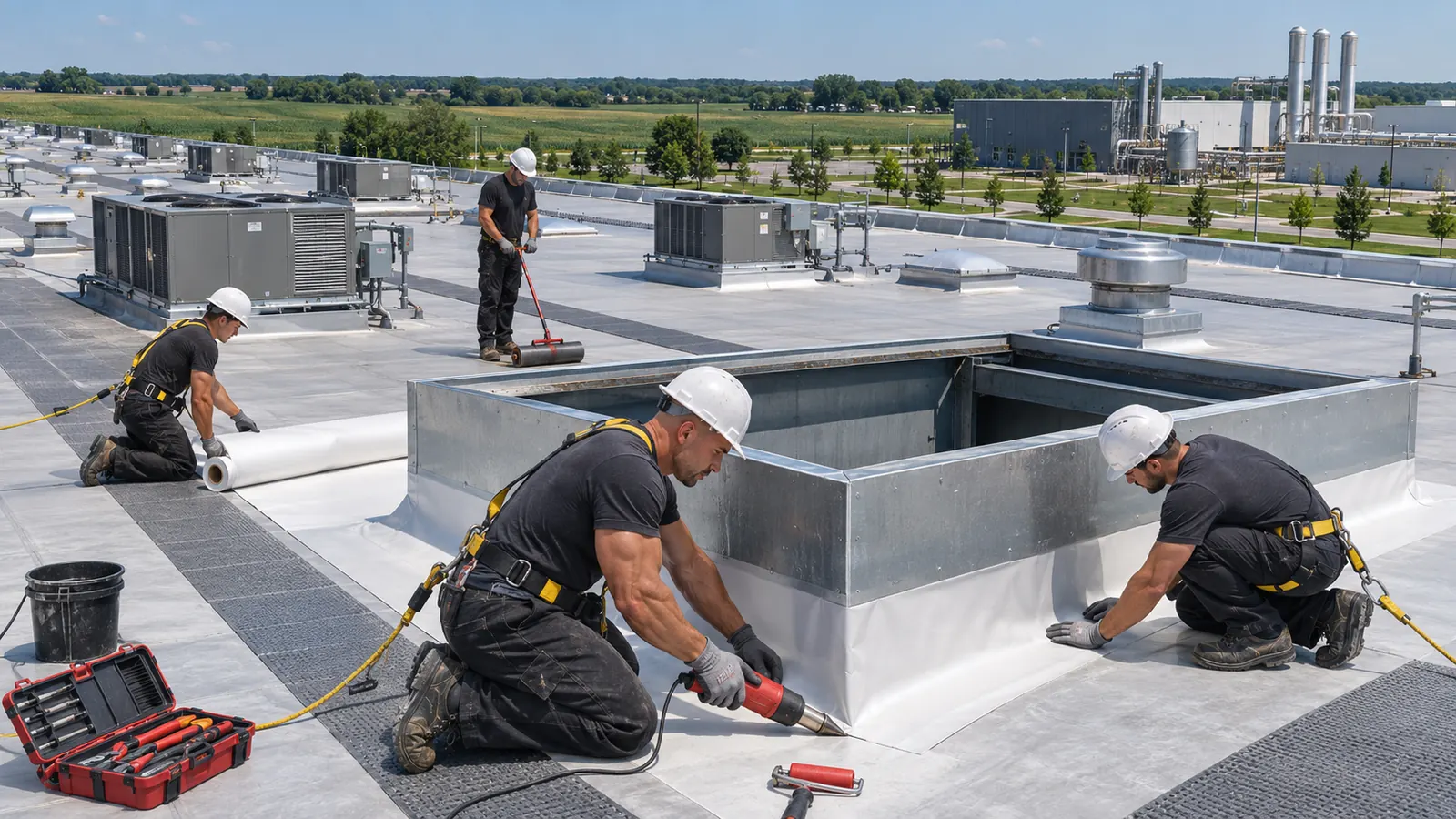
Papillion Industrial Roofing for Plants and Processing Buildings
Papillion industrial roofing jobs differ from retail work because of what runs across the roof: exhaust, piping, and service crews. These lists sort the building types.
Industrial Roofing for Manufacturing Plants Fits When
- Exhaust fans discharge heat, oils, or chemicals onto the roof.
- Process piping and conduit cross the roof on supports.
- Maintenance crews walk the roof every week.
- Heavy units need curbs and supports sized for their weight.
- Production air must stay clean during tear-off.
A Standard Commercial Roof Fits When
- The building is a warehouse with a few HVAC units.
- Only rainwater and dust land on the membrane.
- Roof traffic is limited to seasonal HVAC service.
- The building runs one shift with easy weekend access.
Industrial Roofing Hot Spots on Papillion Plants
Plant roofs wear fastest in five areas. Each gets its own detail in the new roof.
Exhaust Discharge
Grease and solvent from exhaust fans soften some membranes and leave dark stains around the fan. We identify what each fan discharges and use a membrane rated for that contact.
Pipe Supports
Piping rests on supports that cut a membrane as they shift. New supports sit on pads or rails with protection under them, never straight on the sheet.
Equipment Curbs
Heavy units on short or rusted curbs leave no room for new insulation. Curbs get raised and reflashed, and units are reset with plant maintenance on hand.
Traffic Lanes
Daily walks to fans and filters wear paths into the field membrane. Walkway pads mark the path from the hatch to each unit and spread boot traffic.
Roof Drains
Plant roofs collect dust and debris that clog strainers fast. New drains get cast strainers and clamping rings, and tapered board keeps water moving toward them.
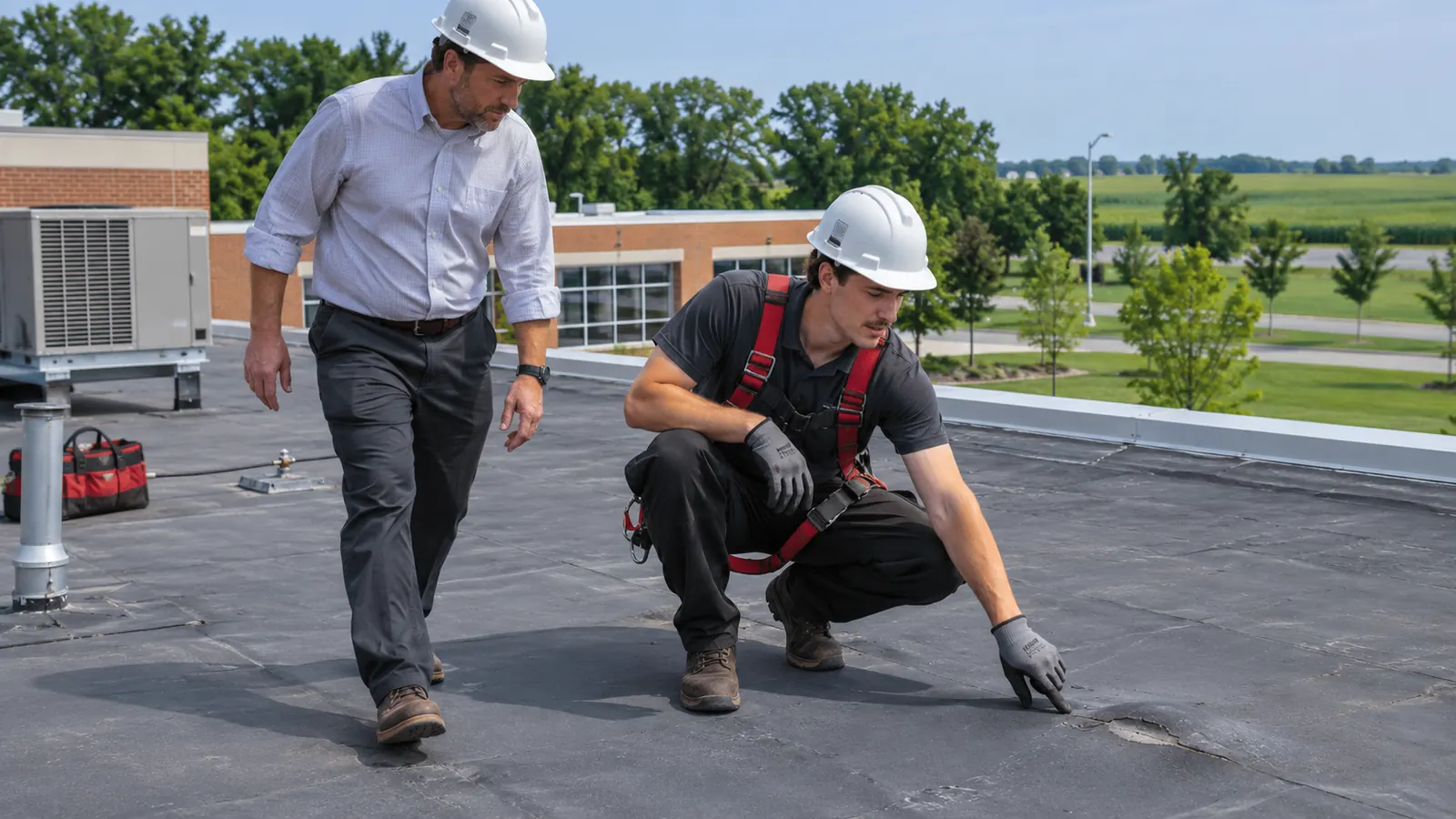
Industrial Roofing Around Papillion Plant Shifts
Plant schedules shape the work as much as the roof does.
We roof low-risk sections first and hold crane picks and noisy work for shift changes or off-hours when the plant allows. Sections over sensitive equipment get temporary protection inside, and intake units are shut down with maintenance staff so production air stays clean.
Roofing Around Rooftop Equipment
- Curbs raised tall enough for flashing and new board
- Pipe supports set on pads above the membrane
- Walkway pads from service doors to every unit
- Shutdowns planned with plant maintenance
What Industrial Roofing Changes at Papillion Facilities
A plant roof built around its equipment is easier to keep dry and easier to service.
Rated Membranes
Sheets chosen for the oils and heat at each fan hold up where an ordinary membrane softens.
Protected Supports
Pads and rails under piping stop the slow cuts that start leaks along pipe runs.
Clean Drainage
Cast strainers and tapered board keep debris-laden water moving off the deck.
Planned Access
Marked walkways and raised curbs make service calls easier for maintenance crews on the roof.
Leak Over the Line, or a Plant Roof to Replace?
Industrial Roofing Work From Survey to Sign-Off
Five steps, each set with your maintenance staff before the crew arrives.
Inspect Your Roof
We map every fan, curb, pipe run, and drain, take core cuts, and note what each exhaust puts on the roof. That survey drives membrane choice and the curb list.
Plan Around Production
Shift times, crane windows, and intake shutdowns are agreed with plant maintenance. Areas over sensitive equipment get inside protection before work starts above them.
Replace Deck And Board
Rusted steel deck is cut out and replaced, then tapered insulation goes down section by section. Each section is dried in before the crew stops for the day.
Install Membrane And Curbs
Reinforced sheets go on, curbs are raised and wrapped, and pipe supports are reset on pads. Welds or taped laps are checked as each section closes.
Hand Over The Roof
Walkway pads go down last, then we walk the roof with maintenance, mark each repaired detail on a roof plan, and leave photos and product data.
Roof Systems for the Rest of a Papillion Plant
Offices, warehouse wings, and sheds attached to a plant often take a different system.
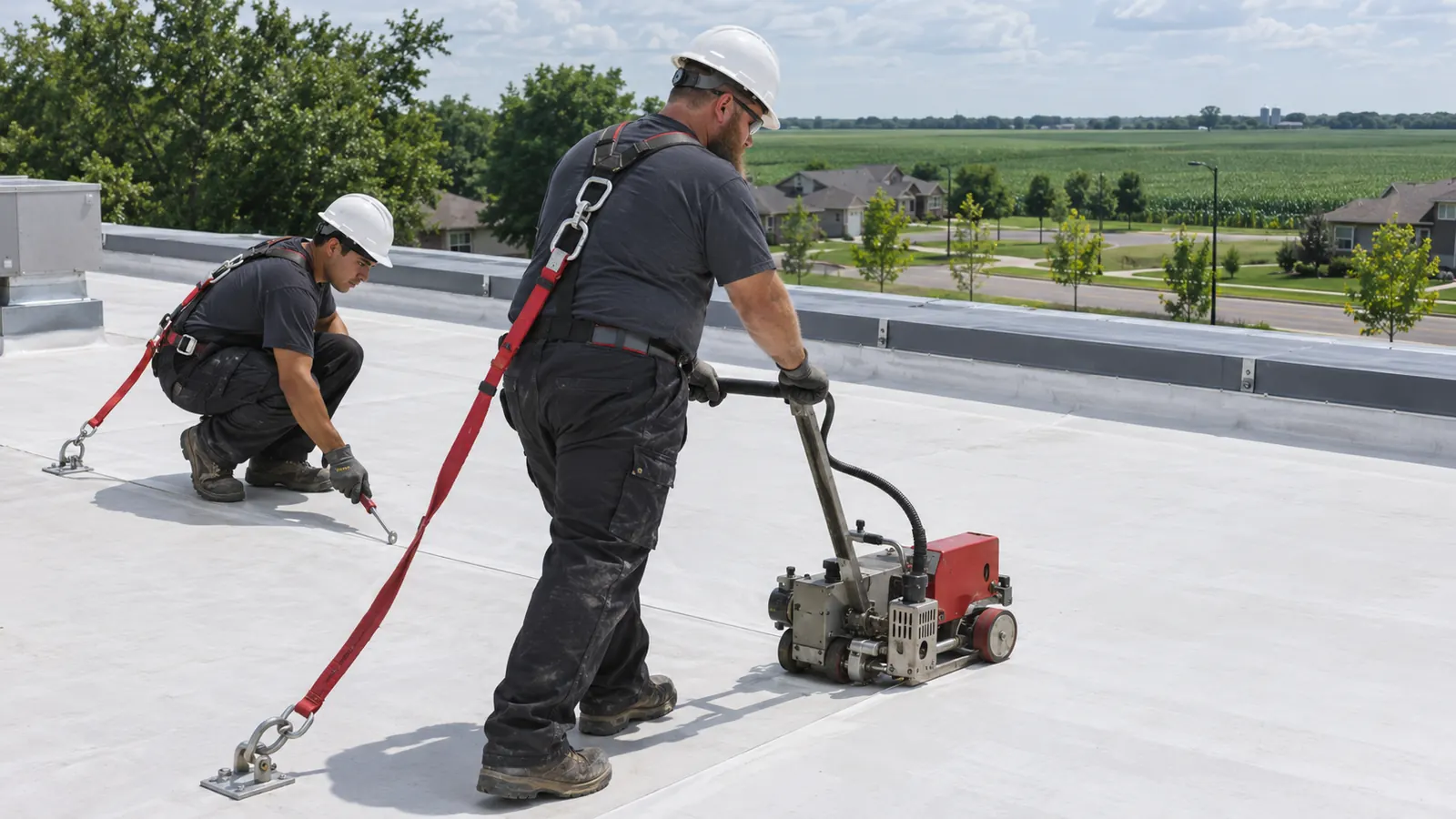
TPO Roofing
Heat-welded white membrane for offices and showrooms attached to the plant, where a reflective roof helps the spaces below.
TPO roofing in Papillion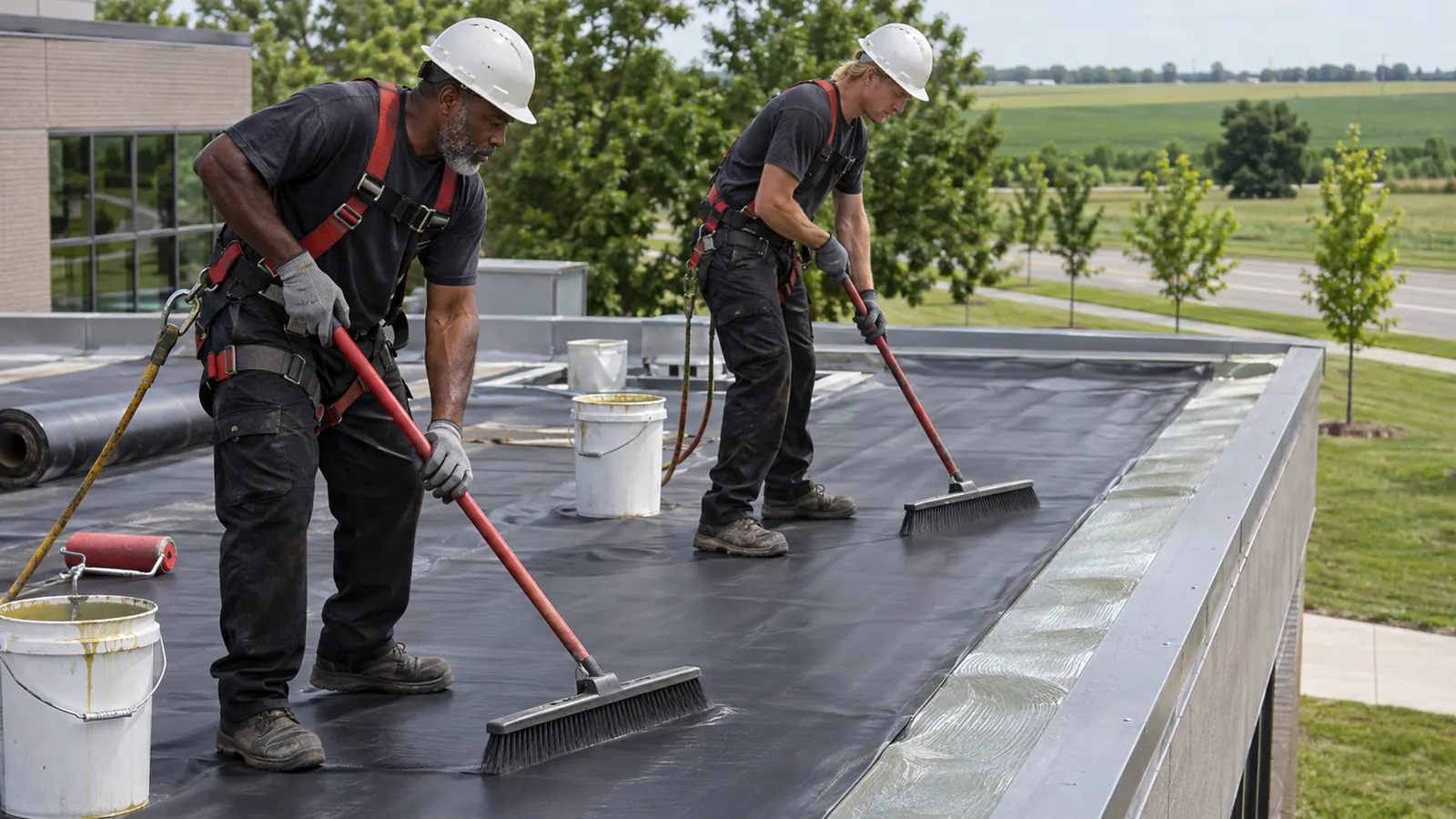
EPDM Roofing
Loose-laid or adhered rubber for warehouse wings and storage bays that carry little rooftop equipment.
EPDM roofing in Papillion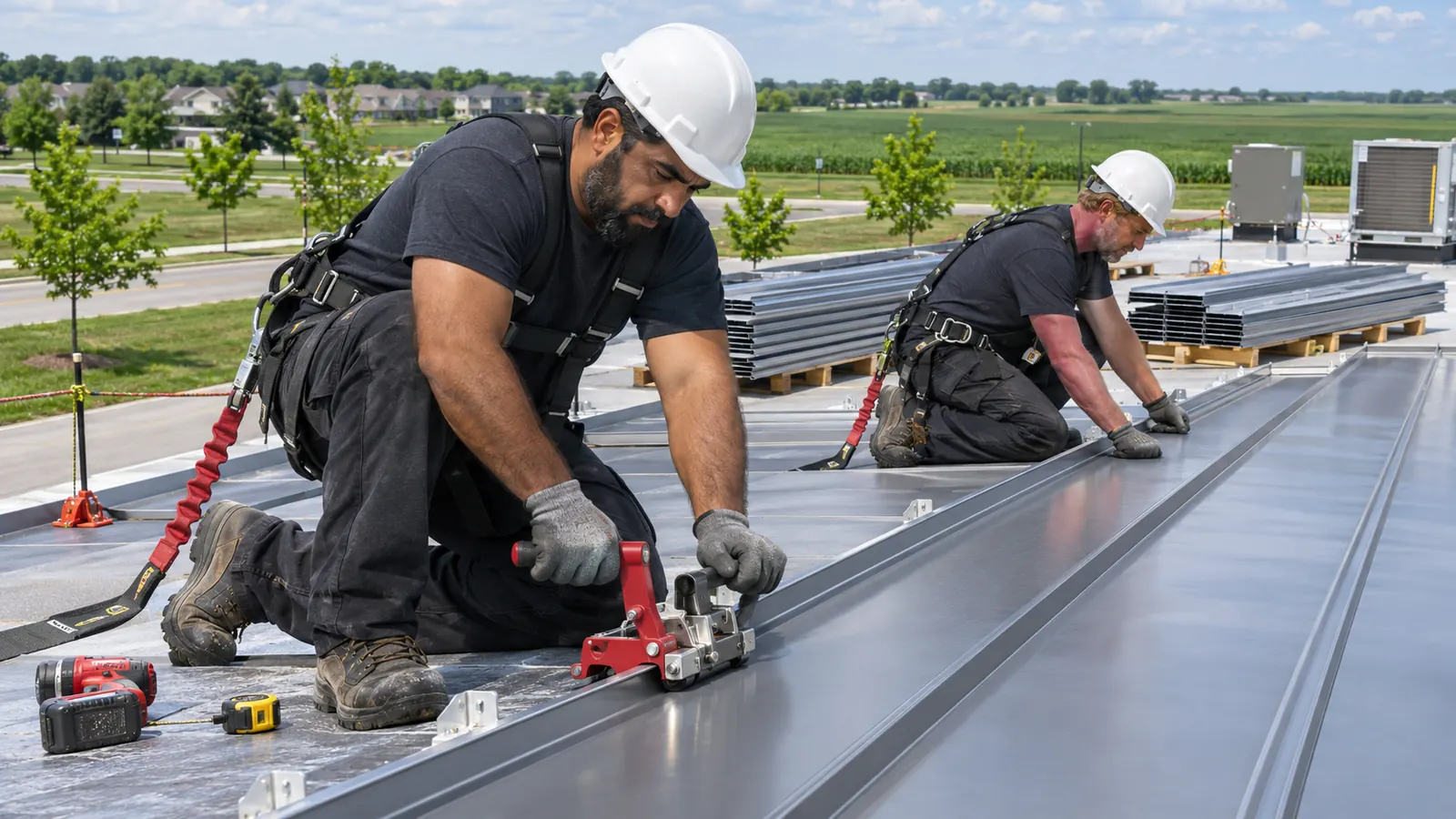
Commercial Metal Roofing
Standing-seam panels for sloped plant additions, equipment sheds, and loading canopies.
Commercial metal roofing in Papillion
Papillion Industrial Roofing Questions
Materials
What industrial roofing works for Papillion manufacturing plants?
Most plants here get a reinforced single-ply membrane or a metal panel roof, picked by deck type and what the processes put on the roof. Heavy equipment needs curbs, supports, and protected walkways, and busy roofs need thicker sheets or pads. The deck, equipment load, and traffic decide the system.
Which industrial roofing materials suit Papillion plants with rooftop exhaust?
Membranes rated for the oils, heat, or chemicals each fan discharges. Some sheets break down under grease or solvent, so the membrane choice matters more here than anywhere else on the roof. Thicker reinforced sheets and walkway protection near vents also hold up better over time.
Equipment And Shifts
How do we roof around rooftop equipment on Papillion industrial buildings?
Curbs, supports, and access paths come first. Each unit sits on a curb tall enough for new insulation and flashing, pipe supports rest on pads that protect the membrane, and walkway pads run to service doors. Shutdowns are coordinated with plant maintenance staff.
How do we schedule industrial roofing around Papillion plant shifts?
Low-risk sections go first, and crane picks or noisy work are set for shift changes or off-hours when the plant allows. Areas above sensitive equipment get protection inside, and exhaust and intake units are coordinated with maintenance so production air stays clean.
Replacement And Upkeep
When does a Papillion industrial roof need replacement?
When leaks return across wide areas, core cuts find wet insulation, or the membrane has turned brittle and cracked. A run of repeated spot repairs, corroded deck, and soft areas underfoot point the same way. Moisture checks show how much of the roof is affected before we recommend it.
How often should a Papillion industrial roof be inspected?
At least twice a year, and again after hail or high wind, with extra checks around fans that discharge oils or heat. Each industrial roof inspection covers curbs, pipe supports, walkway pads, drains, and membrane near exhaust, and the findings go into a running repair log.
Hire a Papillion Industrial Roofing Contractor
Call with the plant address, or send it over and we will set up a roof survey with your maintenance lead.