Papillion TPO Roofing Contractor
Heat-Welded TPO Seams Over New Insulation on Low-Slope Decks
As a Papillion TPO roofing contractor, we install 60 and 80 mil TPO over new insulation, weld every seam, and probe each one before we leave.
Is Papillion TPO Roofing Right for This Roof?
Papillion TPO roofing fits best on low-slope decks with interior drains and plenty of rooftop equipment. These lists show where it fits and where we steer elsewhere.
TPO Fits When
- The deck is low slope with interior drains or scuppers.
- Many rooftop units and curbs need welded flashing details.
- A white surface would help cool top-floor tenants in summer.
- The old roof is coming off and new insulation goes in.
- Service techs walk the roof often and need marked walkway pads.
Another System Fits Better When
- Grease or solvent from exhaust fans lands on the roof daily.
- The roof is sloped enough for metal panels to shed water.
- Repairs years later call for simple tape-and-rubber patching.
- The owner wants black rubber that stays flexible in deep cold.
Where TPO Roofing Fails First on Papillion Buildings
Five spots on a TPO roof take most of the wear. We check each on the walk and build the new roof around them.
Perimeter Edge
Wind pulls hardest at roof corners and edges, so new TPO gets extra fasteners or adhesive in perimeter zones. Edge metal is replaced and covered with a welded strip, closing the gap wind looks for.
Field Seams
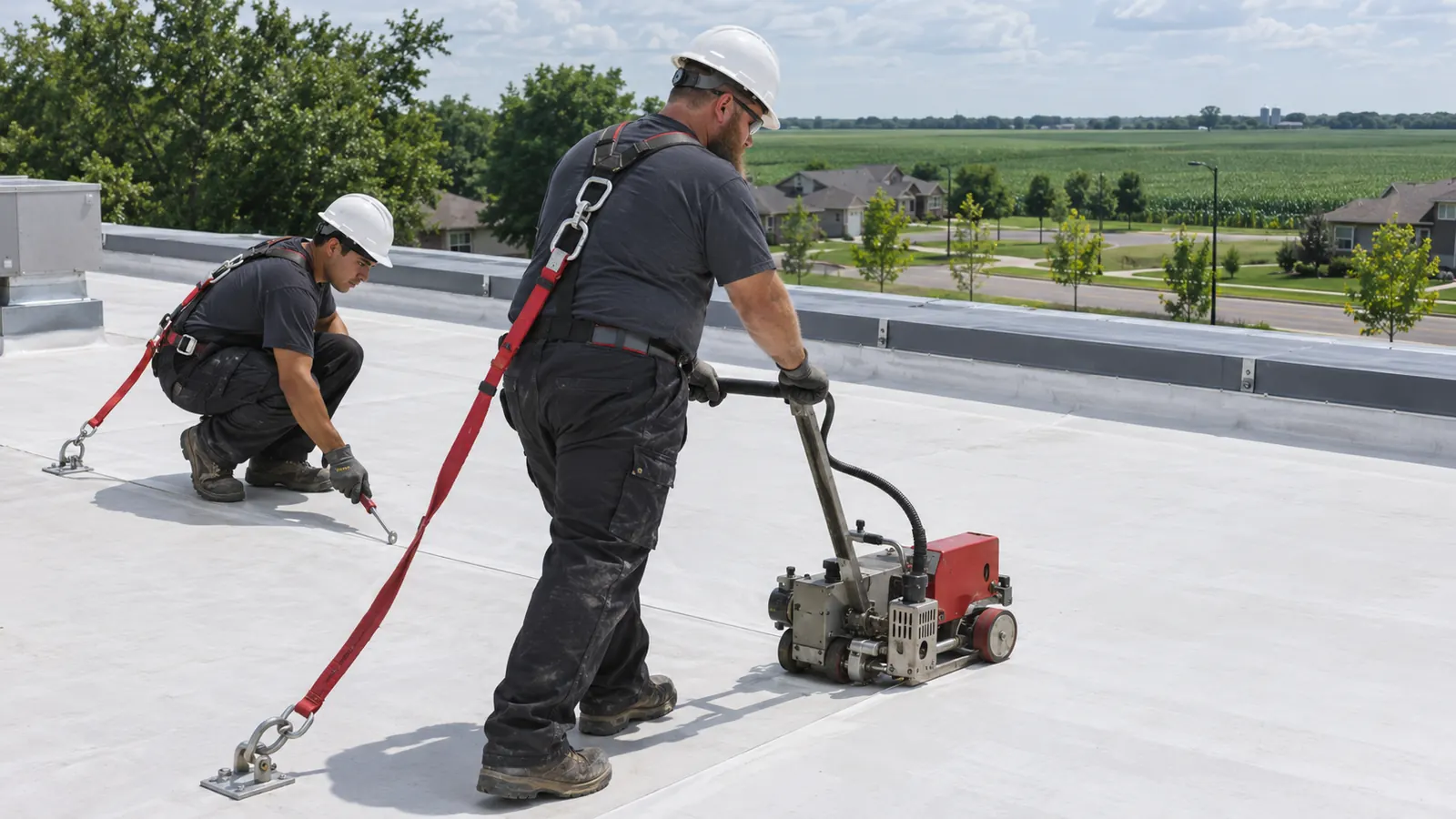
Every field lap is welded with a robotic hot-air welder set by a test weld each morning. A seam probe then runs the whole length, catching cold welds before they turn into ceiling stains.
Drain Sumps
Tapered board slopes water into each drain, and the TPO is clamped under a new ring. Ponding rings on the old roof show us where the new taper needs extra pitch.
Unit Curbs
Curbs get hand-welded corners and flashing run up tall enough to clear new insulation. Short curbs are raised during the job, so the flashing has room to lap properly.
Service Paths
Dropped tools and boots puncture thinner sheets near equipment. Walkway pads welded from the hatch to each unit keep heavy traffic off the field membrane.
TPO Roofing Choices for Papillion Retail Centers
Three choices shape every TPO roof we price: sheet thickness, attachment, and insulation.
Mechanically attached TPO is fastened through the insulation into the deck and works well on steel decks with modest wind exposure. Fully adhered TPO is glued to cover board, which adds adhesive and labor but leaves no fastener plates to flutter in high winds.
TPO vs EPDM on a Retail Roof
- 60 mil for most retail and office roofs
- 80 mil where roof traffic and hail exposure run high
- Tapered polyiso to move water off flat spots
- Cover board under adhered sheets for puncture resistance
What TPO Roofing Brings to Papillion Roofs
These gains come from the membrane itself and from the work that goes in with it.
Welded Laps
Seams fuse into one sheet when heated, so there is no tape or glue line to dry out at the laps.
Reflective Top
The white surface bounces back summer sun that a dark roof would soak into the top floor.
Cleaner Curbs
Hand-welded curb flashing wraps each rooftop unit with membrane instead of mastic and metal patches.
Easy Inspection
A smooth, light sheet shows punctures, dirt rings, and loose plates plainly on a yearly walk.
Wet Ceiling Tile, or a TPO Roof to Plan?
Installing a TPO Roof, Step by Step
A TPO install follows the same five steps on every building, small strip center or big box.
Inspect Your Roof
We walk the roof, mark ponding and open laps, and take core cuts. Wet insulation and the layer count decide whether the new TPO goes over a recover board or onto a stripped deck.
Lay Out Insulation
Tapered polyiso is planned drain by drain so water leaves every low spot. Cover board goes on top where the TPO will be fully adhered or where foot traffic runs heavy.
Roll And Fasten
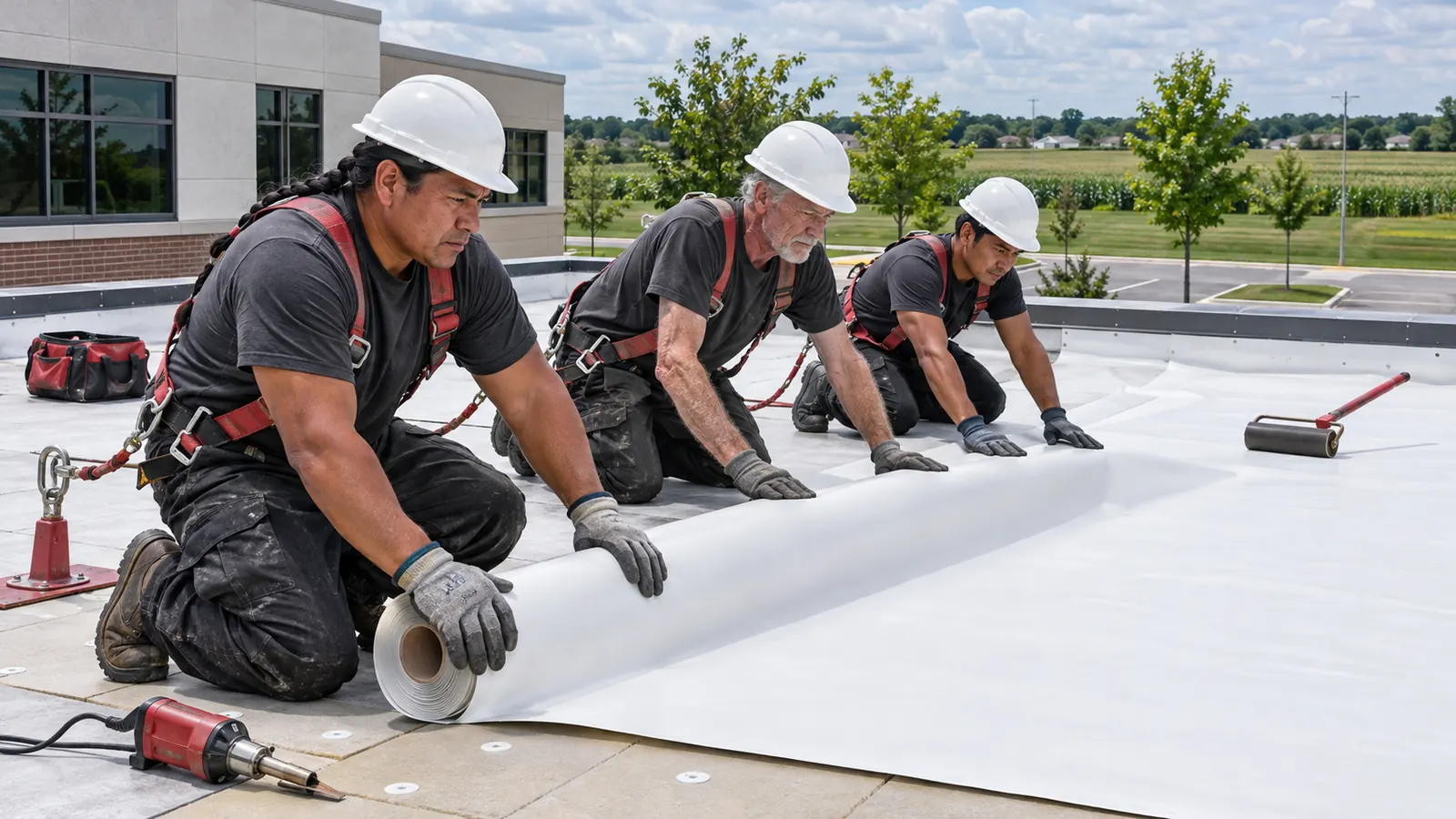
Sheets are unrolled, relaxed, and fastened or glued with extra attachment in corner and perimeter zones. Each lap overlaps the next by the width the membrane maker specifies.
Weld The Seams
A test weld on scrap sets heat and speed for that morning's temperature. The robotic welder runs the field laps, and corners and curbs are welded by hand.
Probe And Walk
Every seam is probed for gaps, and any cold spot is rewelded. Then you walk the finished roof with us and get photos and the product list.
Other Roof Systems We Install Around Papillion
Some buildings need a different system on part of the roof, or across all of it.
EPDM Roofing
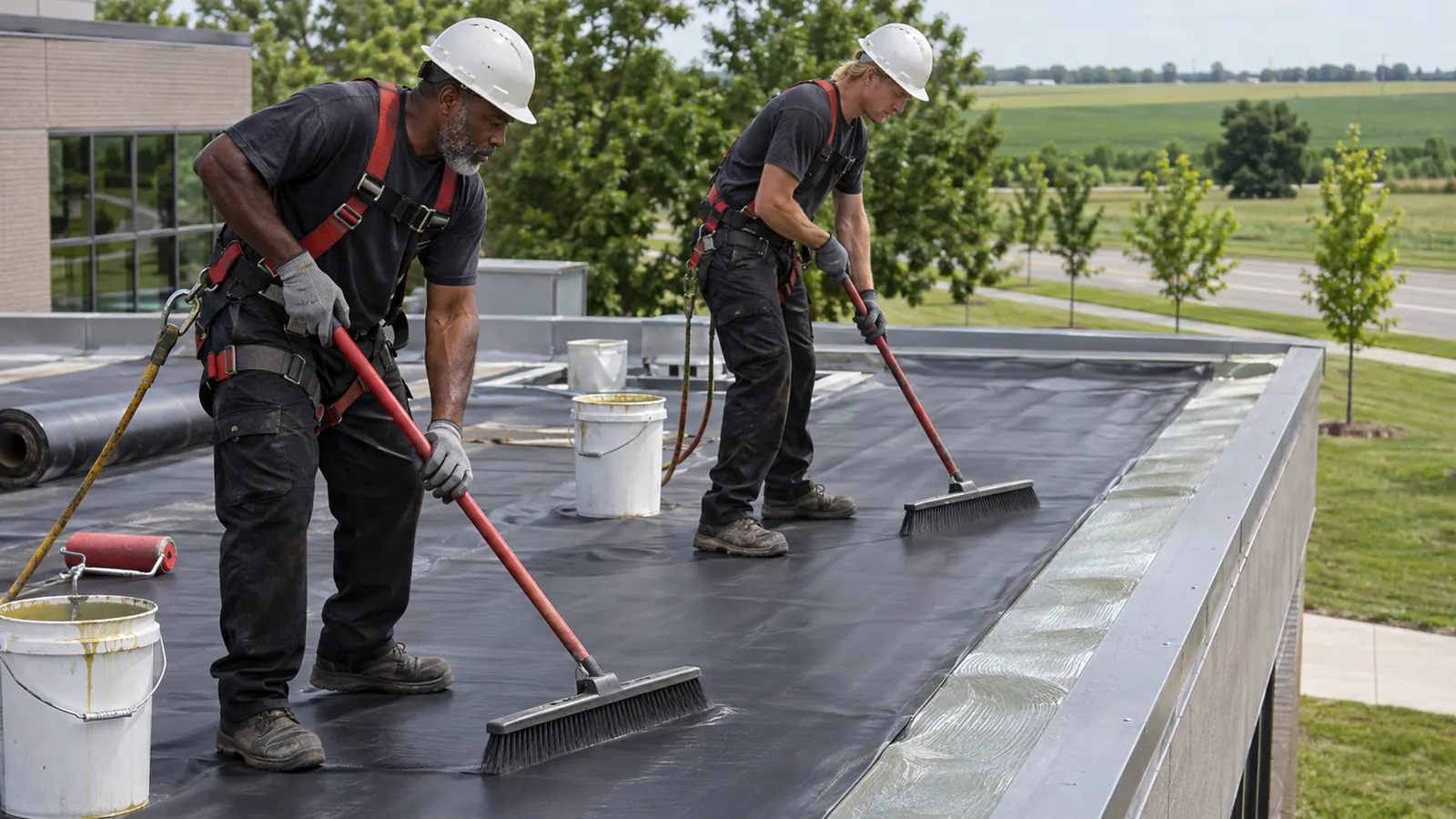
Black rubber that stays flexible in hard freezes and patches simply, chosen for warehouses and roofs with few penetrations.
EPDM roofing in Papillion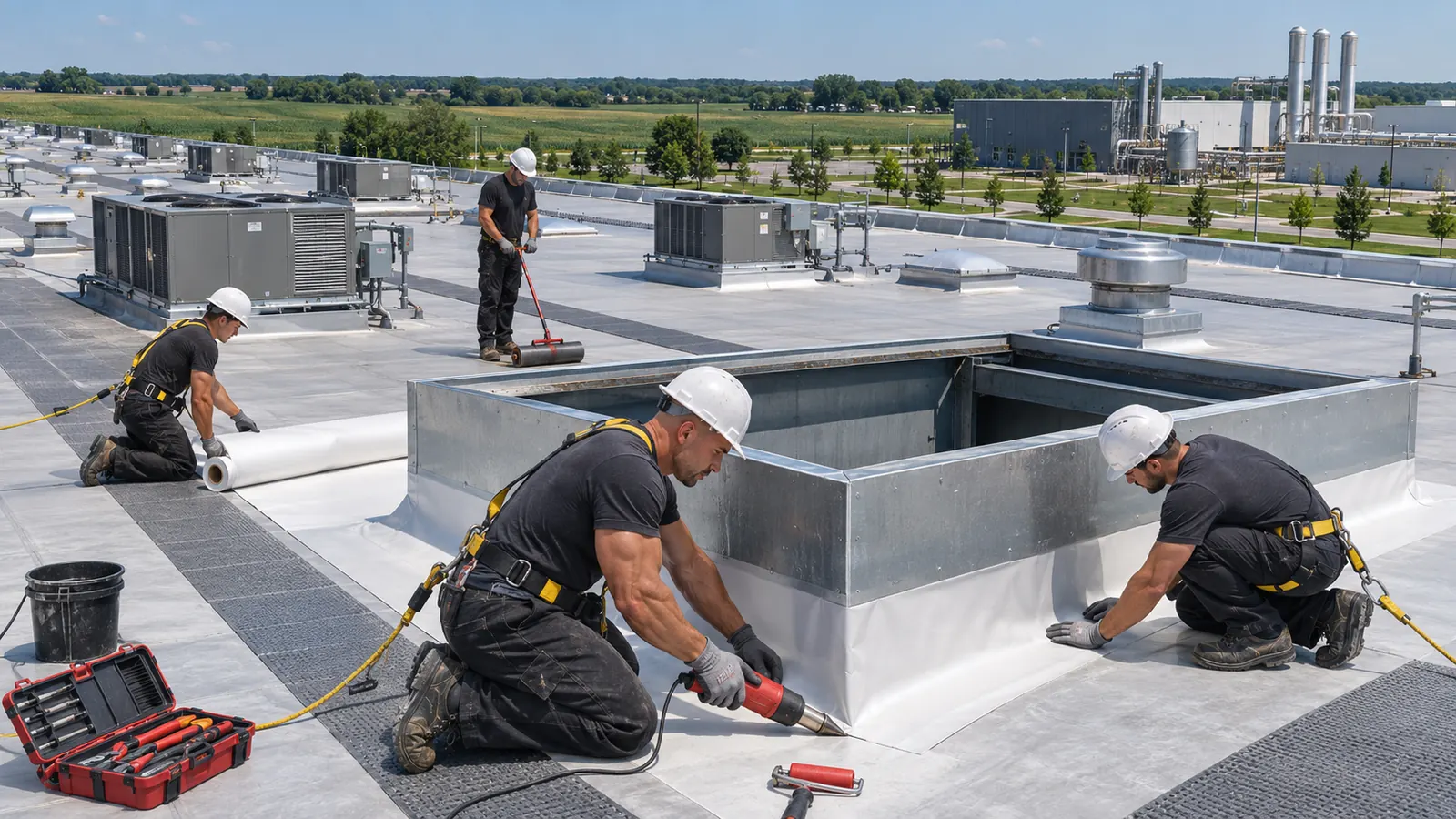
Industrial Roofing
Reinforced membranes, raised curbs, and walkway pads for plant roofs carrying exhaust fans and process piping.
Industrial roofing in Papillion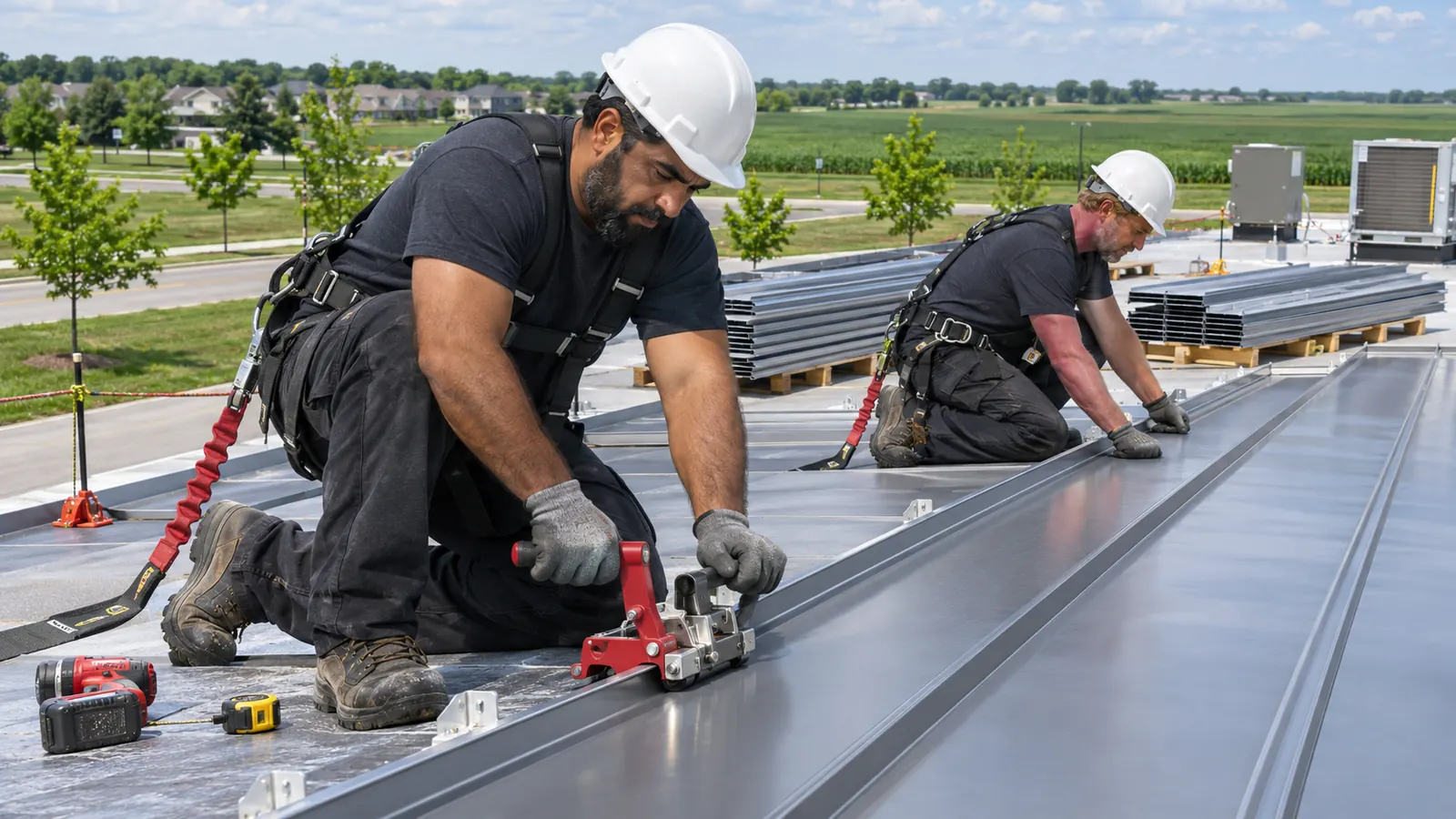
Commercial Metal Roofing
Standing-seam or exposed-fastener panels for sloped shop and ag roofs that need to shed snow quickly.
Commercial metal roofing in Papillion
Papillion TPO Roofing Questions
Cost And Life
What does TPO roofing cost on a Papillion building?
Price follows four choices: membrane thickness, attachment, insulation, and tear-off. An 80 mil sheet costs more than 45 or 60 mil, and full adhesion takes more glue and labor than mechanical fastening. Wet board removal, tapered insulation, and a crowded field of curbs push the total higher.
Can a TPO roof last 30 years in Papillion?
Thirty years is possible but never promised. Thickness, weld quality, drainage, and upkeep set how long a TPO roof serves. Thicker sheets stand up to sun and foot traffic, tight welds and positive drainage head off common failures, and a yearly walk with quick seam repairs keeps it going.
Choosing TPO
What are the downsides of TPO roofing for Papillion buildings?
Three come up most: punctures, workmanship-sensitive seams, and a slick surface. Thin sheets can be pierced by dropped tools, weld strength depends on correct heat and speed, and white TPO turns slippery with frost. Walkway pads and full seam probing after install answer most of these.
TPO vs EPDM: which fits a Papillion flat roof?
Choose TPO for a reflective white roof with welded seams, and EPDM for cold-weather flexibility and easy patching. TPO laps fuse into one sheet; EPDM laps rely on tape and adhesive. Both serve warehouses and retail roofs, so the deck, equipment, and budget decide it.
Install And Weather
How are TPO seams welded on Papillion roofs?
With a robotic hot-air welder that melts the overlapping edges into one layer. Each morning starts with a test weld on scrap to dial in heat and speed for the temperature. Corners and curb details are welded by hand, and every finished seam gets probed for gaps.
How does snow load affect flat roofs in Papillion?
Drifts do the damage, piling against parapets, taller walls, and rooftop units and loading small areas of deck. Melt with nowhere to drain turns into ponded water and adds more weight. On a replacement we check the deck in drift zones, taper toward drains, and keep seams out of drift areas.
Hire a Papillion TPO Roofing Contractor
Send the address and the roof size if you know it, or call to talk through what the roof needs.