Papillion Commercial Metal Roofing Contractor
Standing-Seam and Ribbed Panels That Replace Rusted, Leaking Metal Roofs
As a Papillion commercial metal roofing contractor, we install standing-seam and exposed-fastener panels on shops, ag buildings, and sloped commercial roofs, plus trim and closures.
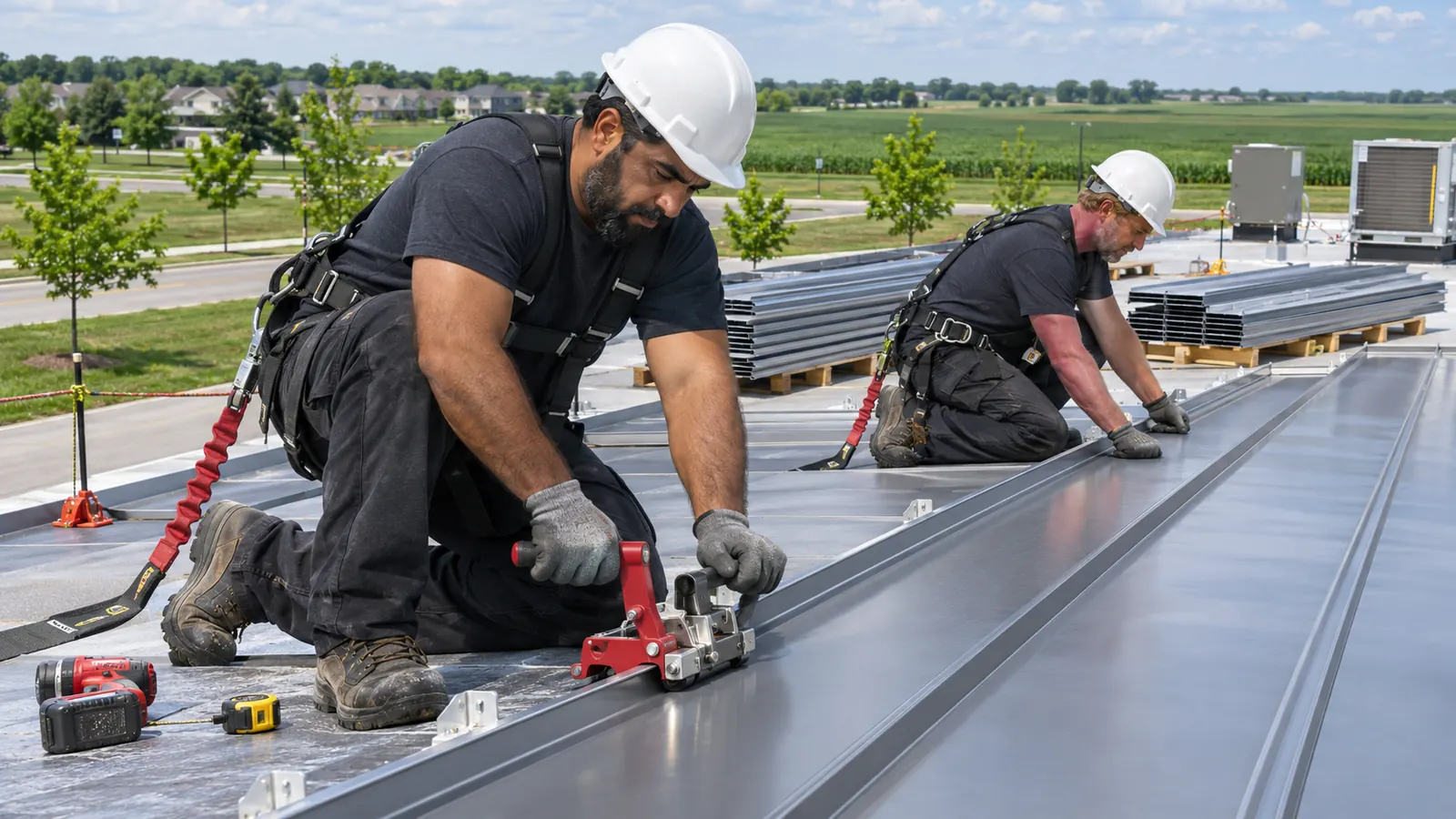
Papillion Commercial Metal Roofing for Shops and Sloped Roofs
Papillion commercial metal roofing works where a roof has enough pitch to shed water and framing spaced for the panels. These lists sort good candidates from roofs better served by a membrane.
Metal Panels Fit When
- The roof has enough slope for panels to shed water.
- Purlins or framing span the distances the panels need.
- Machine sheds, shops, or barns need snow to slide off.
- An old metal roof has rusted through at laps and screws.
- Owners want fewer exposed screws on the new roof.
A Membrane Fits Better When
- The deck is flat with interior drains.
- Many rooftop units crowd the roof field.
- A low-slope addition ties into the building.
- Parapet walls surround the roof on every side.
Where Commercial Metal Roofing Leaks on Papillion Buildings
Metal roofs show their age in the same five places. Each gets addressed in the new install.
Panel Laps
Side and end laps on ribbed panels let water in once sealant dries out and the steel rusts. New laps get butyl tape and stitch screws spaced to the panel maker's pattern.
Screw Rows
Exposed screws back out as panels expand and contract, and cracked washers let water follow the shank. Standing-seam clips hide fasteners and let panels slide with temperature.
Ridge And Eave
Missing closures let blowing snow, birds, and rain in under the ridge cap. Foam or metal closures and new ridge trim seal both ends of each panel run.
Roof Penetrations
Pipe flashings and curbs cut through panel ribs and are a frequent leak point. We use flashings shaped for the rib profile and curb crickets that divert water around them.
Panel Undersides
Warm indoor air meets cold steel and condenses, dripping like a leak. A vapor barrier and insulation under the panels control it on heated shops and offices.
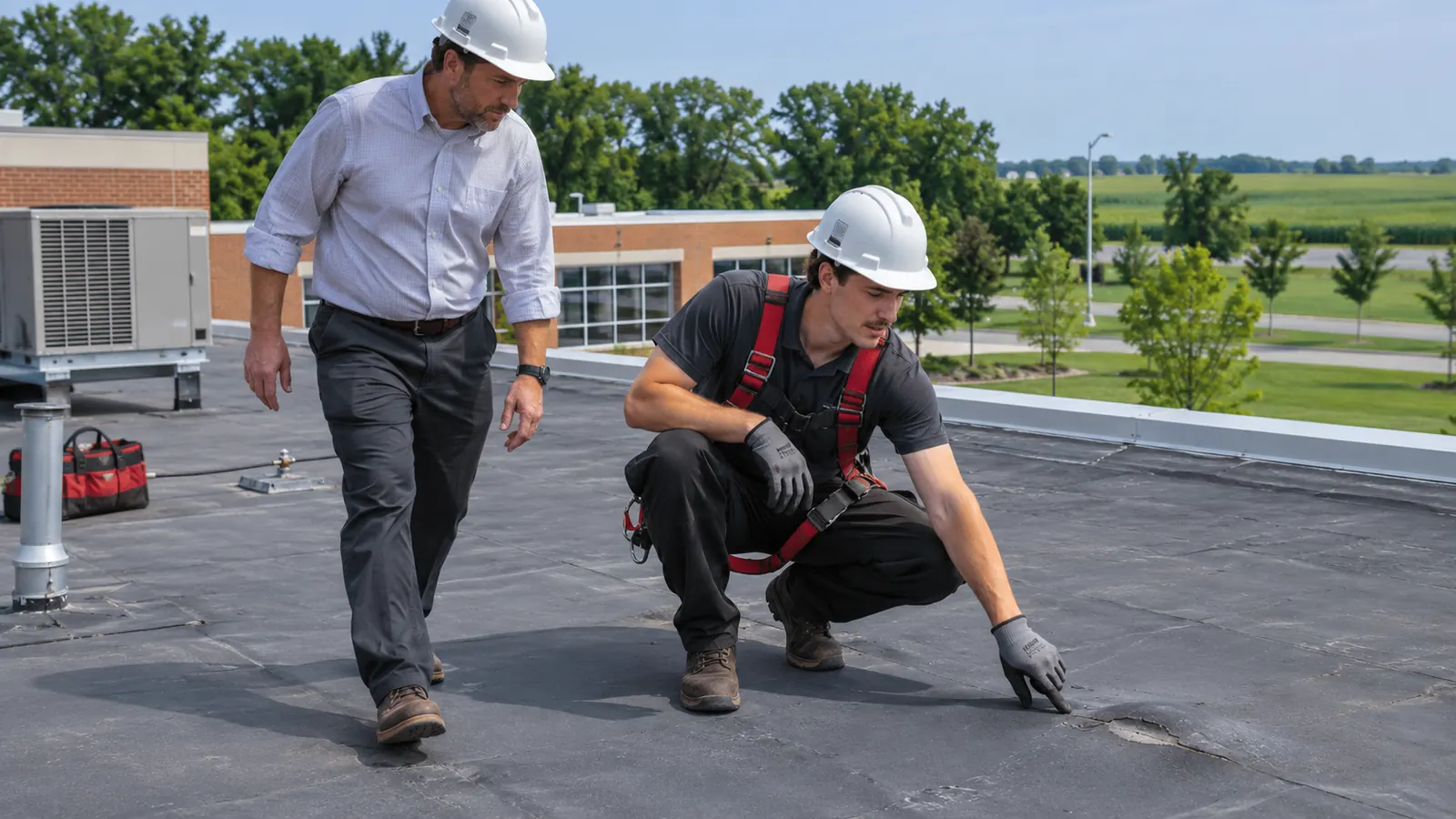
Commercial Metal Roofing Panel Choices in Papillion
Two panel families cover most commercial metal roofs, and the building sets the choice.
Standing-seam panels clip to the structure, hide every fastener, and let the steel move with temperature, which suits heated buildings and lower slopes. Exposed-fastener panels screw through the face into purlins and cost less, making them the usual pick for machine sheds and storage buildings.
Standing Seam vs Exposed Fastener Metal Roofs
- Standing seam: concealed clips and fewer leak points
- Exposed fastener: lower cost and simpler framing
- 24 or 26 gauge picked for the purlin spacing
- Painted finishes in colors matched to the building
What New Commercial Metal Roofing Gives Papillion Owners
A new panel roof pays off on the buildings it fits.
Snow Shedding
Smooth panel flats let snow slide off sloped roofs before drifts load the framing.
Long Spans
Panels bridge wide purlin spacing on shops and barns with no deck needed beneath them.
Hidden Fasteners
Standing-seam clips keep screw heads off the weather side of the roof.
Drier Interiors
Vapor barriers and closures stop condensation drips and blowing snow from getting inside.
Drips From the Panels, or a New Metal Roof?
Building a Commercial Metal Roof, Start to Finish
Five steps carry a metal roof from measurements to the last ridge cap.
Inspect Your Roof
We check purlin spacing and straightness, look for rusted laps and backed-out screws, and measure slope. Framing that sags or rusts is noted for repair before new panels arrive.
Order Panels And Trim
Panel profile, gauge, color, and lengths are ordered to the measurements, along with closures, ridge, eave, and rake trim. Long panels run full length to avoid end laps.
Remove Or Prepare
Old panels come off, or new ones go over spacers where code and the framing allow. Vapor barrier and insulation are set on heated buildings.
Set Panels And Clips
Panels are squared to the eave and fastened with clips or gasketed screws on the specified pattern. Seams are mechanically seamed or snapped as each run goes on.
Trim And Check
Ridge caps, closures, and flashings at walls and penetrations finish the roof. Then we walk every run with you, checking fasteners and seams before the crew packs up.
Membrane Roofs That Tie Into Papillion Metal Buildings
Flat sections, offices, and plant wings beside a metal roof take one of these.
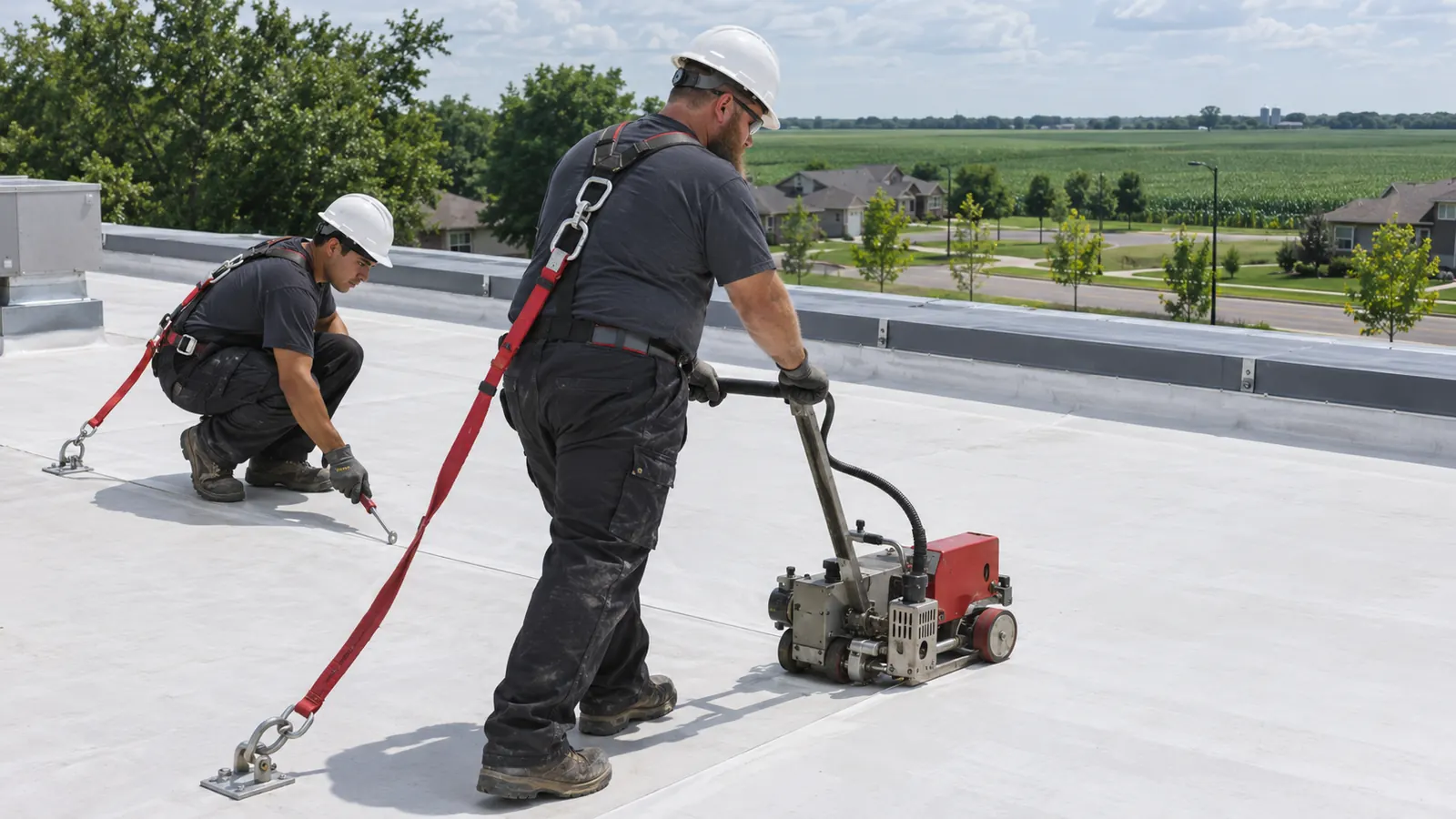
TPO Roofing
Welded white membrane for flat retail and office roofs attached to or beside a metal building.
TPO roofing in Papillion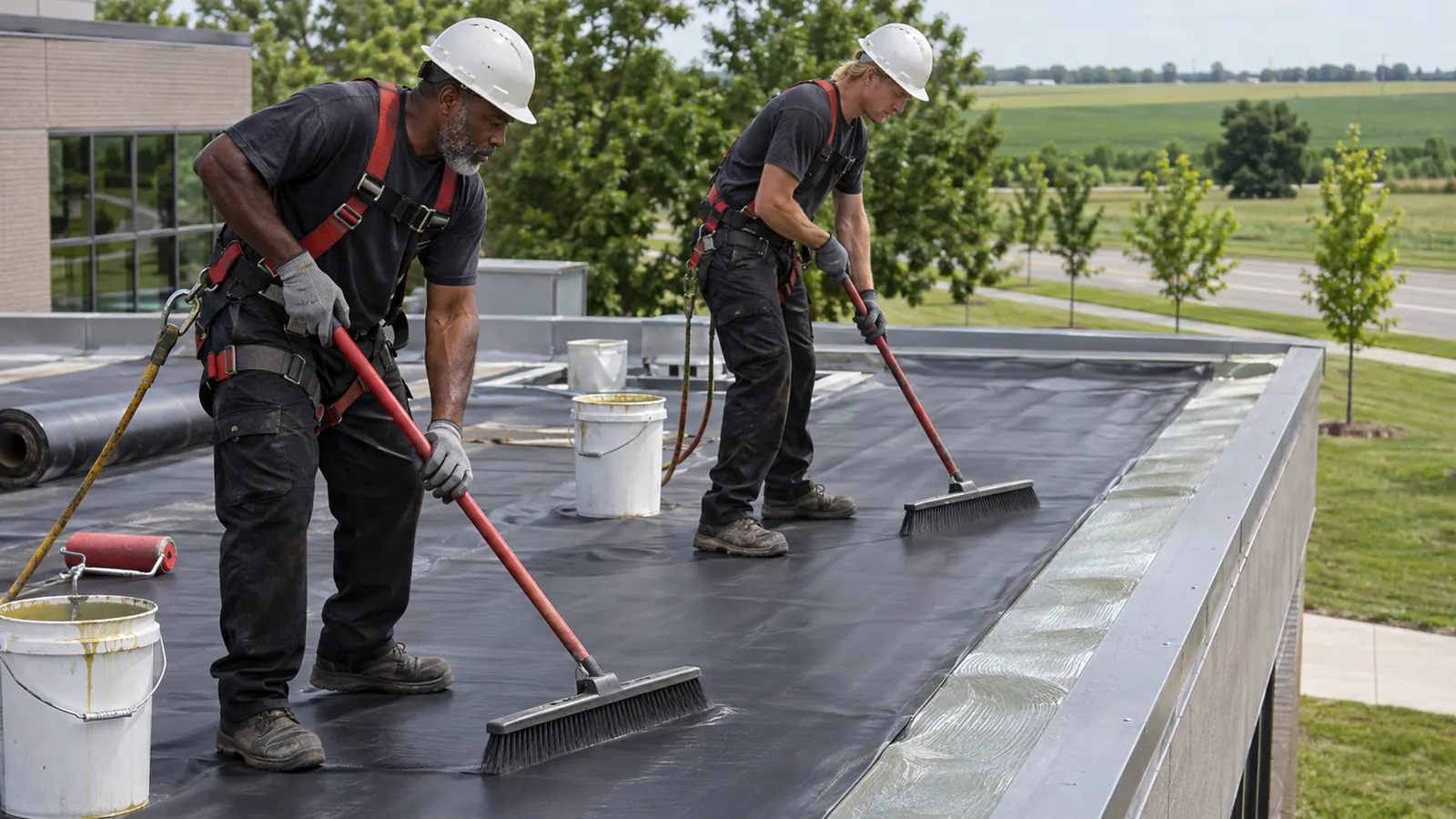
EPDM Roofing
Rubber membrane for low-slope additions and flat sections tied into a metal roof.
EPDM roofing in Papillion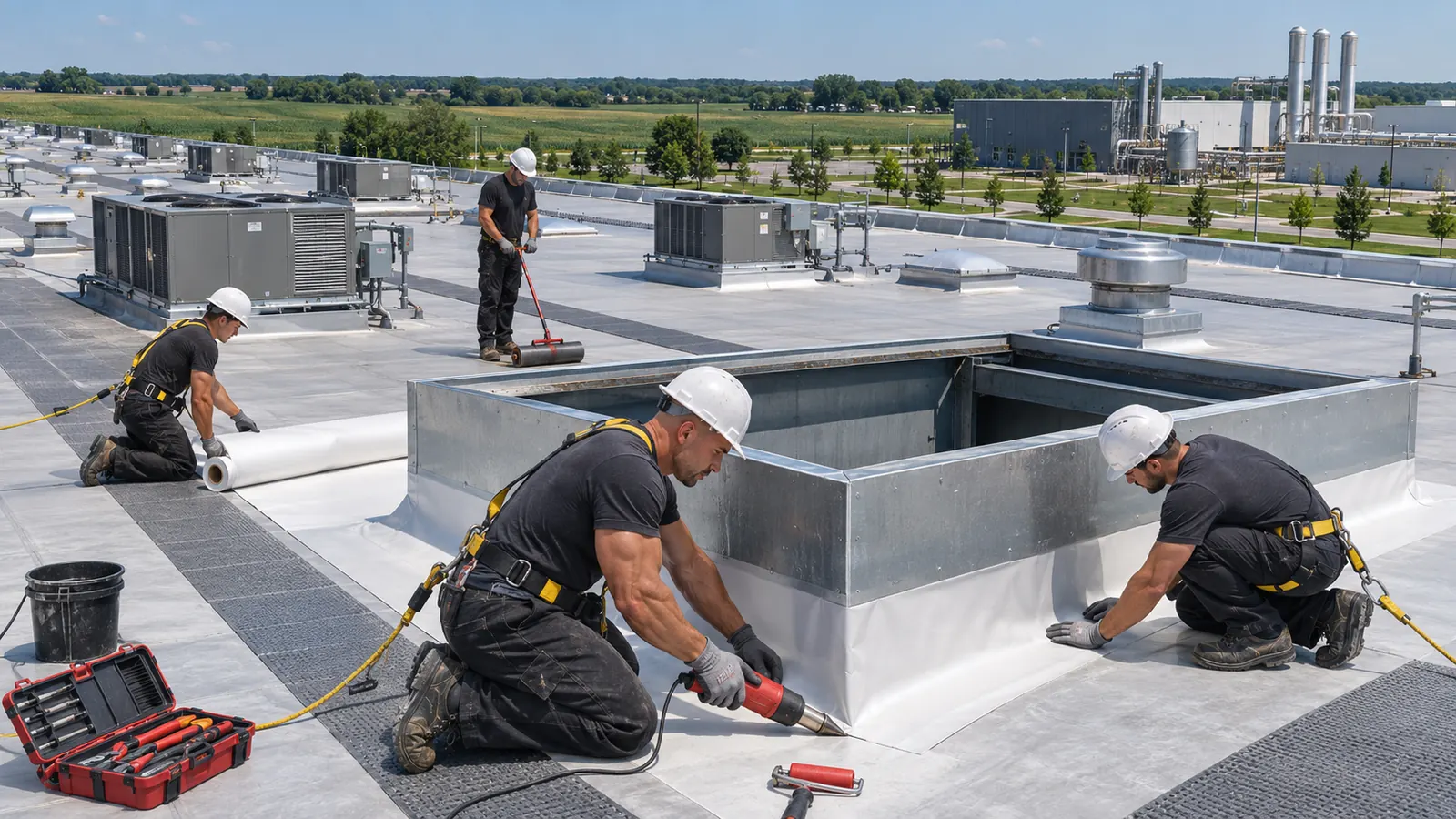
Industrial Roofing
Plant roofs with exhaust, piping, and service traffic, roofed in sections around production.
Industrial roofing in Papillion
Papillion Commercial Metal Roofing Questions
Cost And Choice
How much is a commercial metal roof in Papillion?
Panel type, gauge, roof size, and framing work set the price. Standing seam costs more than exposed-fastener panels, heavier gauges and specialty finishes add material, and tear-off, insulation, or purlin repair raise the total. Trim, gutters, and penetrations round out the number for each building.
Standing seam or exposed fastener: which metal roof fits a Papillion building?
Pick standing seam for fewer exposed fasteners and room for thermal movement; pick exposed fastener for simpler buildings on a tighter budget. Clips hide standing-seam fasteners, while face screws on ribbed panels each become a possible leak point. Slope, budget, and use guide the call.
Problems And Upkeep
What are the biggest problems with metal roofs on Papillion buildings?
Thermal movement, condensation, and exposed fasteners cause most of them. Temperature swings stress screws and trim as panels grow and shrink, and warm inside air condenses under cold steel. Clip systems, vapor barriers, and concealed-fastener panels each answer one of these at installation.
How do we maintain a commercial metal roof in Papillion?
Upkeep covers fasteners, seams, trim, and drainage. We tighten or replace backed-out screws and cracked washers, reseal laps and penetrations, refasten loose trim, and clear gutters and valleys. Spring and fall checks catch winter and storm damage early, and scratches get touched up before rust starts.
Farm And Shop Buildings
Is metal roofing a good fit for agricultural buildings near Papillion?
Yes, metal fits machine sheds, barns, and storage buildings near Papillion because panels span wide framing and shed snow and rain fast. Exposed-fastener panels on purlins are the usual choice. We check purlin spacing, gauge, and screw pattern, and add closures at eaves and ridges to keep out birds and snow.
What gauge of metal roofing do Papillion shops need?
Purlin spacing and the panel maker's load tables decide it. Many shop and ag roofs use 26 gauge ribbed panels on closely spaced purlins, while wider spans and standing-seam systems often call for 24 gauge. We match gauge to the spans we measure on the roof walk.
Hire a Papillion Commercial Metal Roofing Contractor
Send the building address and rough roof size, or call and describe the panels and framing.